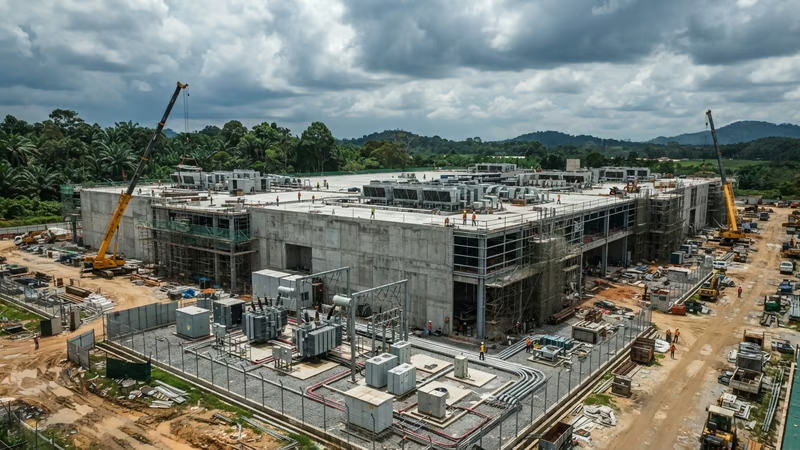
Malaysia Falls Behind Smart Factory Target by 2030
Malaysia remains far from its 2030 target of 3,000 smart factories. This article examines what that gap means for the industrial property market, how factory specifications, tenant screening and retrofit priorities are shifting, and what owners and manufacturers can do about it.
Key Takeaways
- Malaysia remains far from its national target of 3,000 smart factories by 2030, and progress has not kept pace.
- Smart manufacturing depends on building fundamentals: power capacity, network infrastructure, floor loading and spatial flexibility, not just equipment purchases.
- Older factories that have not been upgraded will increasingly be screened out by higher value manufacturing tenants.
- Early stage investor 1337 Ventures has named industry and AI among seven focus areas in its 2026 Request for Startups, signalling where industrial technology demand is heading.
- Factory owners should shift retrofit budgets toward electrical, network and compliance upgrades rather than cosmetic work, because that is what determines occupancy and rental resilience.
Why the 3,000 smart factory target matters to industrial property
According to The Star, Malaysia is still far from its target of 3,000 smart factories by 2030. On the surface this looks like a manufacturing policy issue. For the industrial property market, it is a direct signal about supply and demand structure.
The reason is straightforward. A smart factory is not a label. It is a different way of producing. When a production line brings in automation equipment, sensors, real time data collection and connected systems, the demands placed on the building itself change completely from the standard factory built twenty years ago. In other words, whether the national target can be met depends on how many factories can actually support smart manufacturing.
That gap is the most underrated variable in today's industrial property market.
What smart factories actually require from a building
Power capacity is the first gate
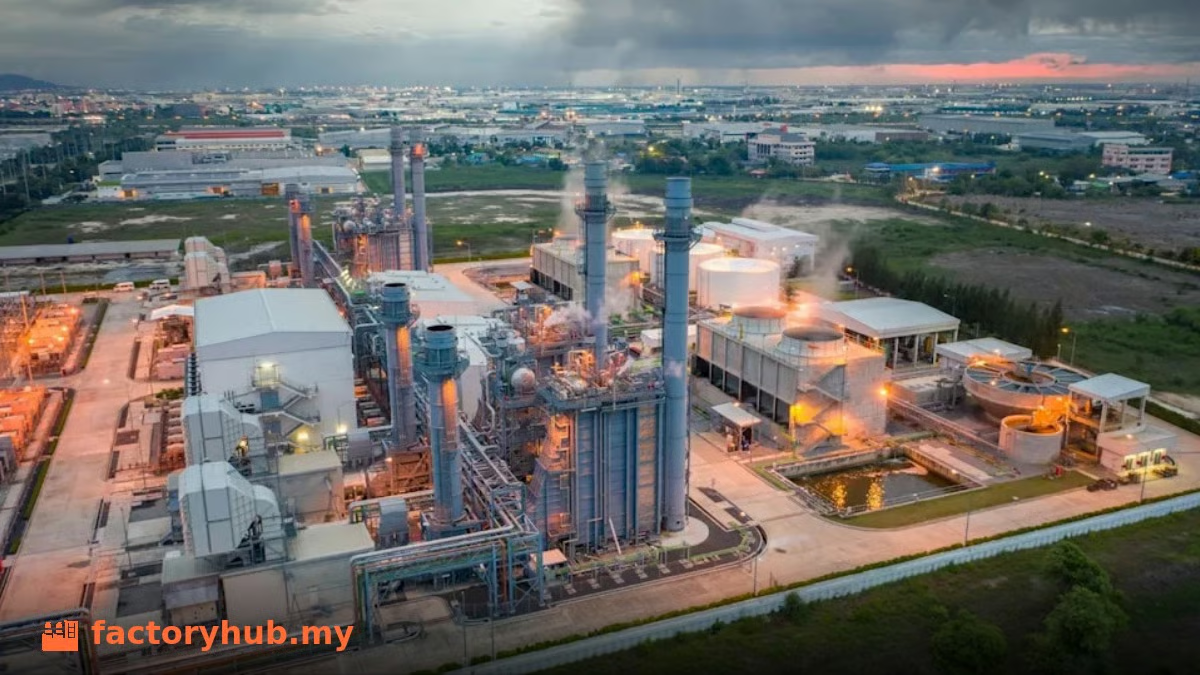
Automated lines, robotics, machine vision systems and data infrastructure draw far more power per square foot than traditional labour intensive assembly. Many factories built in the 1990s or early 2000s were designed for lighting, air conditioning and basic machinery. When tenants want to install high draw equipment, they often face long approval cycles and significant cost for power upgrades.
This changes tenant screening logic. Manufacturers now confirm available power headroom before discussing rent.
Network and data foundations determine whether systems work
Smart factories depend on stable data links. Without structured cabling, server room space and redundancy design, even the most advanced equipment will struggle to integrate. This is especially visible in older multi storey factories, where vertical signal coverage and cable routing require additional work.
Floor loading and spatial flexibility
Automated storage and heavy equipment impose clear floor loading requirements. Smart lines also tend to need wider column spacing and greater clear height to allow future layout changes. Fixed partitions and narrow column grids in older factories become physical obstacles to reconfiguration.
Compliance and fire safety standards
Higher density electrical equipment and energy storage raise fire, ventilation and hazardous material requirements. Factories without reserved upgrade space face larger approval risk and downtime cost during renovation.
What the shortfall means for the market
Older factories will diverge faster
When smart factory adoption runs slower than policy expectations, two tiers of factories emerge. One has completed power, network and compliance upgrades. These attract higher value manufacturing tenants, retain them longer and support rents. The other has stalled hardware conditions, serving only industries with lower automation needs, and faces downward rental pressure.
This is not a short term phenomenon. It is structural. Once upgrade work is deferred, the gap widens with every technology cycle.
Tenant mix will reorder
For manufacturers, site selection weighting is shifting. Rent used to be the first consideration. Today, power headroom, network foundations and retrofit feasibility often rank higher. Factory owners competing only on low rent may fail to attract tenants with the ability to commit long term.
Retrofit budget allocation needs to change
In the past, factory renovation often meant painting, replacing floor tiles and tidying the facade. Under rising smart manufacturing demand, the value of cosmetic spending for occupancy is weakening. What actually determines competitiveness is what tenants cannot see but must use: transformer equipment, cable pathways, server room space, structural reinforcement and compliance documentation.

What the venture capital signal tells us
Separately, early stage investor 1337 Ventures has launched its 2026 Request for Startups, identifying seven problem areas spanning artificial intelligence, industry, healthcare and climate, with a focus on capital efficient ideas that have deeper industry moats and clear validation paths.
There is a link between this and the smart factory target. When venture investors name industry and AI as priority areas, it suggests the market believes many problems remain unsolved and new companies are needed to address them. Those companies will eventually need physical space: research areas, small batch production space and later, scaled up factories.
For industrial property, this means demand is becoming more diverse. Beyond traditional manufacturing tenants, industrial software teams, hardware validation teams and technical service providers will gradually enter the factory and warehouse leasing market. Their space requirements differ from conventional factories, often favouring shorter leases, flexible partitioning and stronger network conditions.
Practical advice for factory owners
Start with a hardware audit
Before considering any renovation, take stock of power capacity, current cabling, floor loading records and fire compliance status. This list is not just a renovation brief. It is the most persuasive material when speaking with prospective tenants.
Prioritise spending on what cannot be seen
Power upgrades, structured cabling, server room allocation and structural reinforcement usually cost more than cosmetic work, but they influence tenant decisions far more directly. Owners can phase this, starting with the bottleneck that most affects leasing.
Leave room for flexible lease terms
Facing potentially more startup and technology tenants, factories that can offer divisible units and more flexible lease arrangements will capture this new demand more easily.
Document the upgrade value
After completing upgrades, keep full engineering records and compliance documents. During tenant due diligence, these files can significantly shorten negotiation cycles.
Practical advice for manufacturers and tenants
Put power and network near the top of your site checklist
When comparing factories, alongside rent and location, confirm available power headroom, network access conditions and upgrade feasibility. The impact of these factors on time to production often exceeds rental differences.
Include retrofit cost in total cost of occupancy
Rent is only one part of the cost. If a factory needs substantial work to meet production needs, retrofit expense, approval time and downtime loss should all be factored in, rather than deciding on headline rent alone.
Favour factories with basic upgrades completed
If your business is in a rapid expansion phase, time cost often matters more than one off spending. Choosing a factory that has completed power and network upgrades can shorten the cycle from signing to production.
Closing view
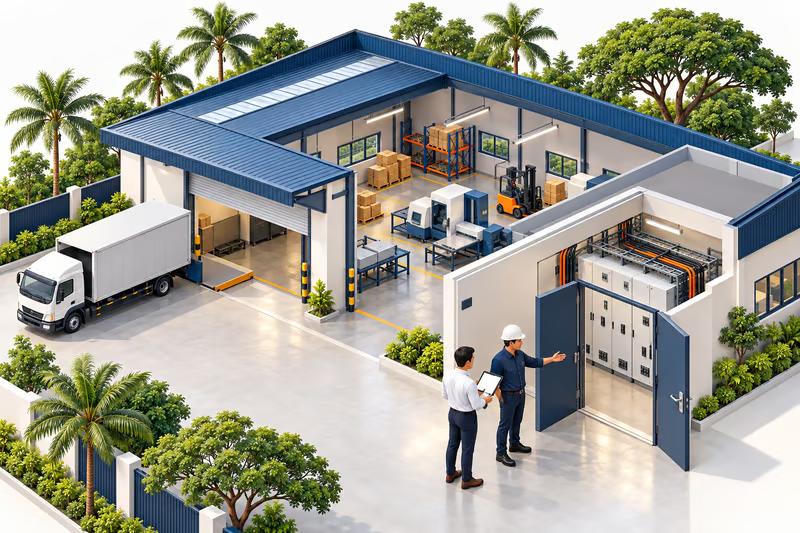
The pace of the smart factory target will ultimately show up in how the factory market stratifies. The gap between policy ambition and market reality is both a challenge and an opportunity for owners to reposition asset value. Hardware upgrading is not a one off expense. It is the foundation work that keeps a factory competitive over the next decade.
BuyKlang.my is dedicated to helping every client find the right factory or warehouse. Whether you are an owner planning an upgrade or a business searching for suitable production space, we want to make that step steadier and clearer.
Factories and Warehouses in Port Klang
Archived catalogue records with power, ceiling height and floor loading for every unit: