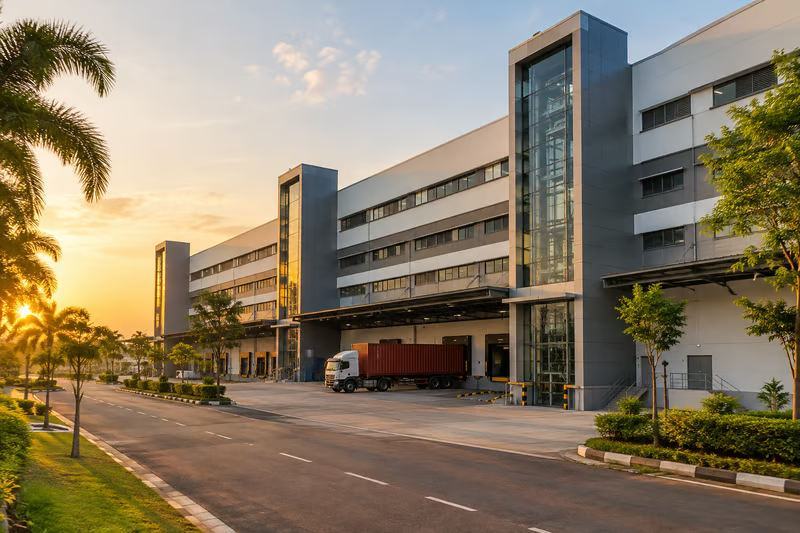
Terrace Factory for Sale in Malaysia: 2026 Price Guide & Where to Buy
The terrace (link) factory is the lowest-cost way into industrial ownership. Where the live supply is (Nilai, Glenmarie, Shah Alam), current price bands from RM500K, corner-lot premiums and the specs that matter.
Key Takeaways
- Terrace factories (also called link factories) share side walls with neighbouring units, making them the lowest-cost way to own an industrial property in Malaysia.
- Live asking prices on BuyKlang currently range from entry-level pricing in outlying estates to premium seven-figure pricing for large corner units in prime parks.
- Supply concentrates in Nilai, Glenmarie, Shah Alam, Kota Kemuning and the Klang belt; corner lots with extra land command clear premiums.
- Best suited to start-ups, workshops, light manufacturing, e-commerce storage and investors seeking rental yield from SME tenants.
- Check floor loading, power supply and lorry access before buying; these limit what a terrace unit can actually run.
- In 2026, terrace factories remain the most liquid entry point into industrial property for owner-occupiers and small-scale investors.
The terrace factory is where most Malaysian SMEs first become industrial property owners. This guide covers what the segment offers, where the live supply sits, current price behaviour, and the specs that separate a usable unit from a cheap mistake.
What Is a Terrace (Link) Factory?
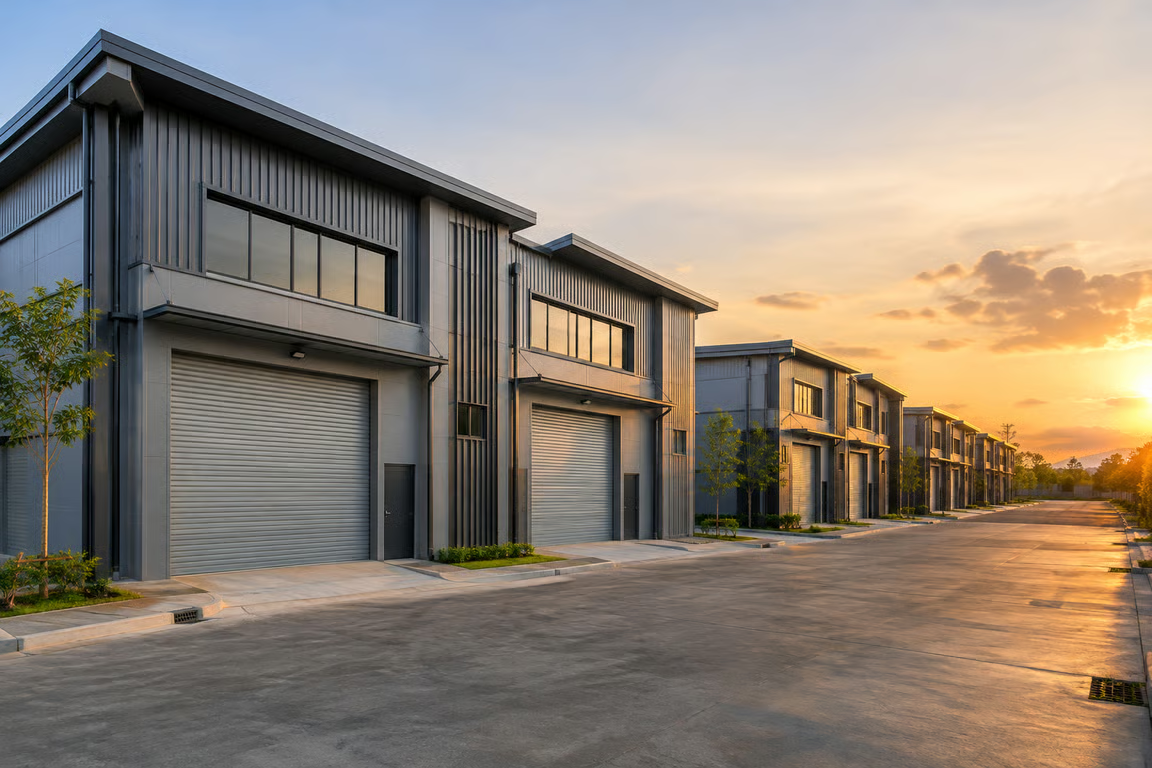
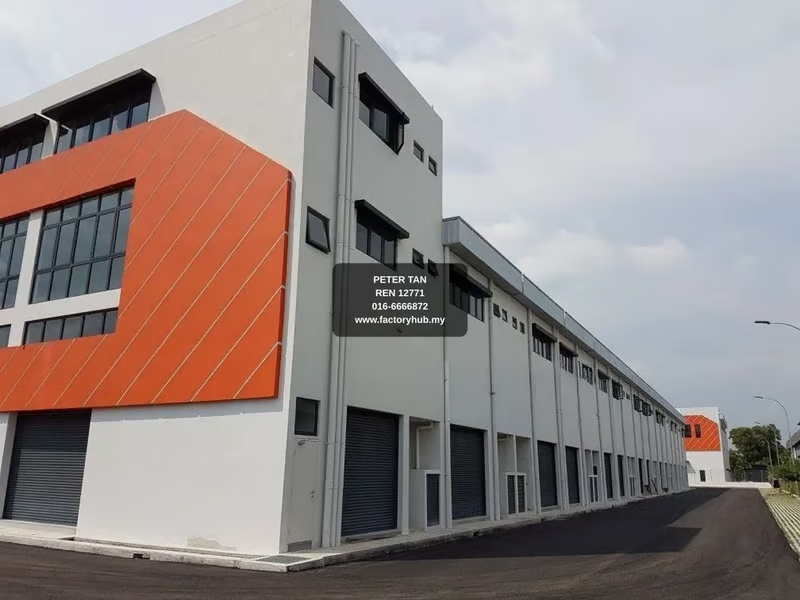
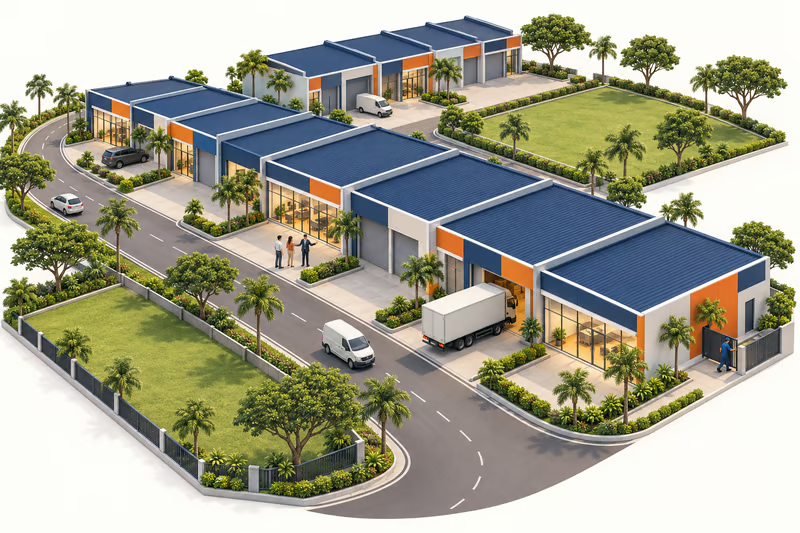
A terrace factory is a row of industrial units sharing side walls, the industrial equivalent of a terrace house. Intermediate units have frontage only; corner and end lots gain side land that can serve as extra parking, storage or loading space, which is why corners price noticeably higher.
You get a compact, easy-to-manage footprint with genuine industrial zoning and your own title, at a fraction of the cost of a semi-D. The trade-offs: limited yard, shared walls, and specs (power, floor loading, ceiling) built for light use.
Typical users: workshops and fabricators, printing and packaging, spare parts and trading stock, e-commerce fulfilment, food processing at the light end, and first-time industrial investors.
Terrace Factory vs Semi-D vs Detached Factory
Understanding where terrace factories sit in the industrial hierarchy helps you decide whether to stretch your budget or stay disciplined.
| Feature | Terrace / Link Factory | Semi-D Factory | Detached Factory |
|---|---|---|---|
| Sharing | Side walls shared | One side wall shared, or partly detached | Standalone, no shared walls |
| Yard space | Minimal; corner lots better | Moderate | Large, configurable |
| Price entry | Lowest in the segment | Mid to upper | Highest |
| Power and floor loading | Usually light industrial | Often medium industrial | Medium to heavy industrial |
| Lorry access | Tight for 40-foot containers | Better, but still site-specific | Best |
| Resale liquidity | Highest, deep SME buyer pool | Moderate | Narrower buyer pool |
| Best for | Start-ups, workshops, e-commerce, light manufacturing | Growing SMEs, showroom-workshop hybrids | Heavy manufacturing, logistics, large operations |
If your process needs heavy machinery, high amperage or frequent container movement, a terrace unit may constrain you. If you need a cost-effective base with industrial title and strong resale demand, it is often the right first step.
Where the Supply Is (July 2026)
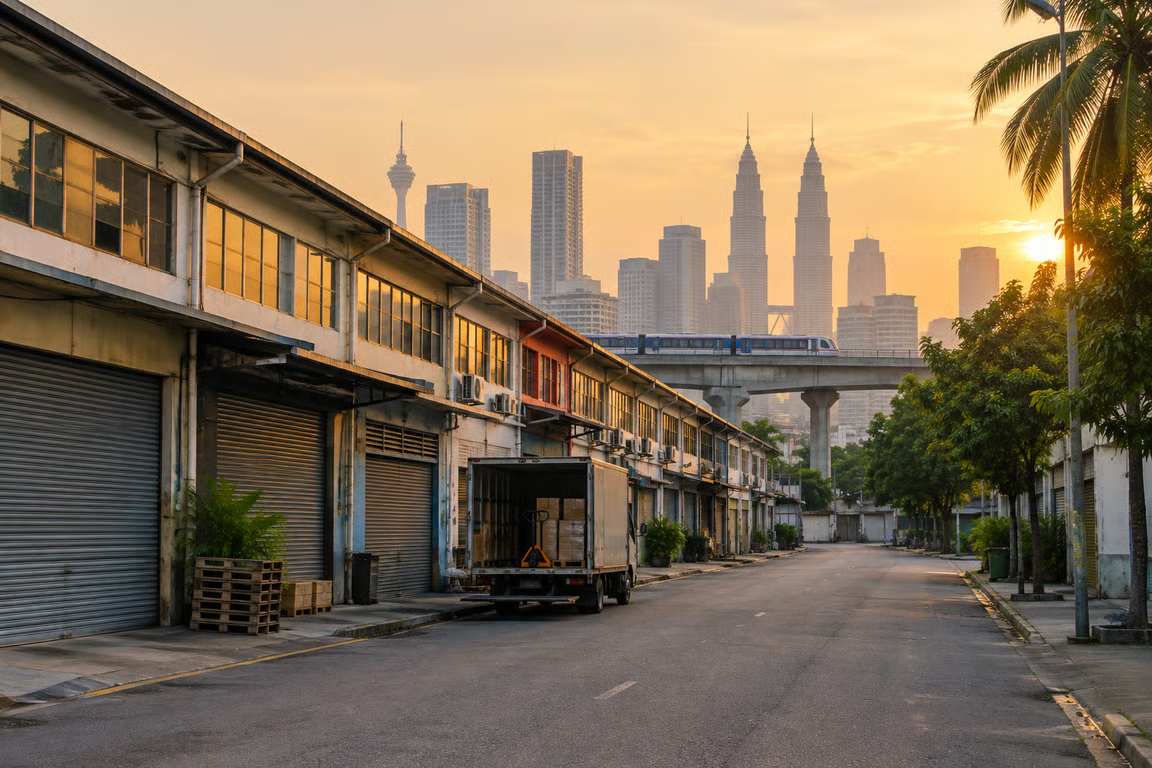
- Nilai: estates such as Nilai 3, Nilai 7 and Arab Malaysian Industrial Park hold consistent terrace stock; see the Nilai factory guide and browse link factories in Nilai.
- Glenmarie (Shah Alam): the premium end of the segment, popular for showroom-plus-workshop use; browse link factories in Glenmarie.
- Shah Alam and Kota Kemuning: mature estates with steady demand from upgrading tenants; see link factories in Shah Alam.
- The Klang belt: pockets across Bandar Puteri Klang, Kapar and Pandamaran serve port-linked trades.
Corridor context is in our industrial areas in KL and Selangor guide.
Location & Logistics Analysis
The right estate is not just about the address. For terrace factories, logistics and labour access often determine whether a unit is productive or painful.
Highway and interchange proximity. Units within a few minutes of an interchange, such as NKVE, ELITE, KESAS, LDP or Federal Highway, cut daily transport time for staff, suppliers and customers. In 2026, congestion during peak hours makes “near the highway” a measurable productivity advantage, not a marketing line.
Port and airport access. For importers, exporters and e-commerce sellers, the Klang belt offers easier access to Port Klang, while Nilai and southern Selangor suit businesses linking to KLIA and the southern industrial corridor. If your operation relies on containers, confirm the last-mile route, not just the distance.
Labour catchment. Terrace factories depend on nearby workforces: technicians, machine operators, packers and drivers. Mature estates in Shah Alam, Klang and Nilai have deeper labour pools and better public transport than isolated new industrial parks.
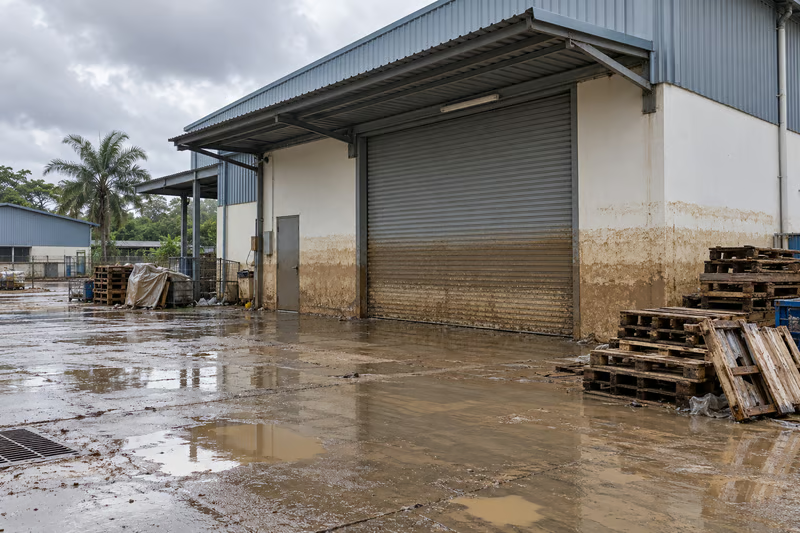
Flood and drainage risk. Low-lying pockets in parts of Klang, Shah Alam and older estates can flood. Check site levels, drainage reserves and recent flood history. Insurance premiums and business interruption risk both rise in flood-prone locations.
Neighbouring uses. A terrace row may mix workshops, storage, food processing and trading. If your process generates noise, fumes, dust or heavy traffic, a neighbour-sensitive use can trigger complaints and licensing problems. Match the estate’s character before you commit.
Price Behaviour
Terrace factory pricing spreads wider than any other factory type because unit sizes and estates vary so much. On BuyKlang, entry units in outlying estates are the most affordable, mainstream Klang Valley stock occupies the middle of the market, and large corner units in prime parks command premium pricing. Three variables do most of the work:
- Corner versus intermediate. Side land adds usable yard, and the market prices it in.
- Estate and access. A unit minutes from a highway interchange or port gate outperforms an identical unit deeper in the estate.
- Approved use and spec. Higher amperage, reinforced flooring or an approved mezzanine lifts both price and rentability.
In 2026, asking prices also reflect financing conditions. When loan approvals tighten, well-priced intermediate units move faster because the buyer pool is wider. Corner units still attract owner-occupiers who need yard space, but they can sit longer if the premium is not justified by access or approved extensions.
Suitable Industries and Use Cases
Terrace factories work best for businesses that need an industrial address, a compact footprint and reasonable power, but do not need heavy logistics.
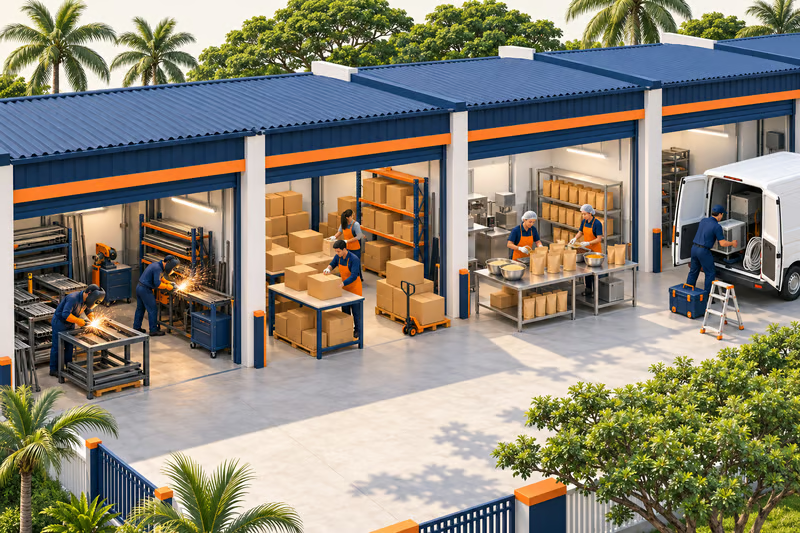
- Workshops and fabrication: metalwork, welding, carpentry, upholstery, signage and general repair.
- Light manufacturing: assembly, packaging, electronics sub-assembly, garments and small-batch production.
- E-commerce and fulfilment: storage, picking, packing and last-mile dispatch for online sellers.
- Trading and spare parts: stockholding, distribution and counter sales with light storage.
- Food processing at the light end: dry goods packing, central kitchens and non-pollutive preparation, subject to local authority approval.
- Service trades: air-conditioning, plumbing, electrical and equipment servicing.
- Investors: buying to rent to SME tenants who need a practical industrial base without semi-D costs.
Less suitable: heavy engineering, chemical processing, smelting, large-scale logistics, or any use requiring frequent 40-foot container access and high power.
Buying as an Investor
Terrace factories are the most liquid industrial rental product: SME tenants are plentiful, ticket sizes suit more buyers on exit, and vacancy periods are typically shorter than for large detached plants. Yields vary by estate and condition; compare asking rents on our factory for rent pages against asking prices in the same estate before committing.
Look beyond gross yield. Net yield should account for vacancy, maintenance, quit rent, assessment, insurance, agent fees and repairs. A unit that rents quickly at a slightly lower rate can outperform a higher-rent unit that sits empty for months. Corner lots, units near interchanges and estates with strong SME demand tend to hold value best.
What to Check Before You Buy
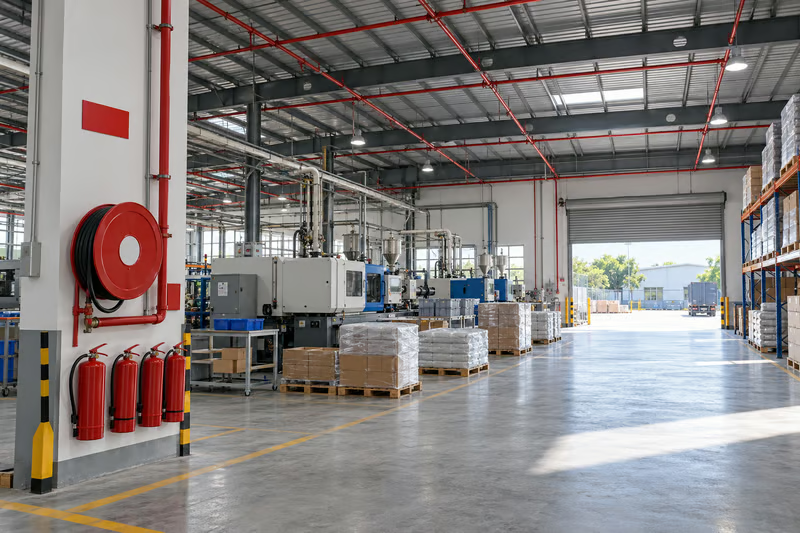
- Floor loading. Older terrace units may take only light racking; heavy machinery needs verified structural capacity.
- Power supply. Many older units carry under 100 amp; upgrading is possible but costs time and money.
- Lorry access. Confirm what vehicle size can actually reach your door during estate peak hours.
- Zoning and licence fit. Light industrial zoning will not cover pollutive processes; match your licence before paying a deposit.
- Ceiling height and mezzanine. Check approved height and whether any existing mezzanine is legal and certified.
- Drainage and loading bay. Poor drainage can flood your yard; a shared loading bay may create disputes.
- Title and restrictions. Confirm the title type, express conditions, and whether the property is strata or individual title.
- Outstanding charges. Check quit rent, assessment, maintenance fees and utility arrears before signing.
- Full cost of purchase. Stamp duty and legal fees add up; run the numbers with our legal fees calculator and the industrial property loan guide.
Viewing and Signing Process
A disciplined process prevents expensive mistakes.
- Shortlist by use case first. List your power, floor loading, ceiling, yard and vehicle requirements before viewing.
- View at peak hours. Visit during morning and afternoon peak to see real traffic, parking and loading conditions.
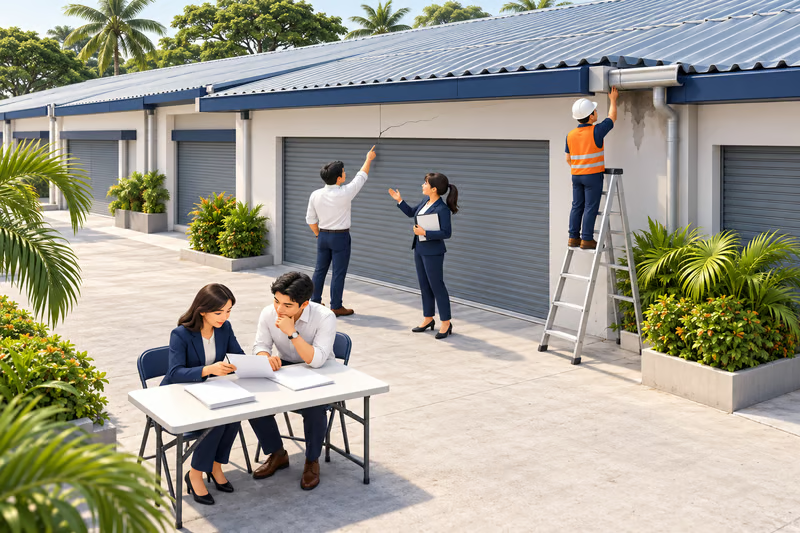
- Inspect the building envelope. Look for cracks, roof leaks, wall dampness, floor damage and shared-wall issues.
- Verify utilities. Ask for recent electricity bills and check the approved power supply. Confirm water pressure and drainage.
- Check approvals. Request copies of approved plans, CF/CCC, and any extensions or mezzanine approvals.
- Make an offer to purchase. State price, deposit, completion period, and conditions such as satisfactory due diligence and loan approval.
- Appoint a lawyer and valuer. The bank will require a valuation; your lawyer conducts title searches and drafts the SPA.
- Complete due diligence. Confirm no caveats, encumbrances, unpaid charges or illegal structures.
- Sign the SPA and pay the balance. Follow the staged payment schedule and monitor loan disbursement.
- Take vacant possession and renovate. Get written approval for renovations and utility upgrades before starting work.
Financing and Cost Considerations
Industrial property loans are assessed differently from residential loans. Banks look at the property’s use, title, remaining lease, tenant profile and your business income. A terrace factory with a clean title and strong location is easier to finance than a specialised building with limited resale demand.
Budget for more than the purchase price: down payment, stamp duty, legal fees, valuation fees, loan processing, insurance, renovation, power upgrade, racking and moving costs. If you are buying under a company, check whether the bank requires personal guarantees or additional collateral. For a full cost walkthrough, use the industrial property loan guide.
Market Outlook for 2026
Demand for terrace factories continues to come from three sources: SME owner-occupiers upgrading from rented premises, e-commerce businesses needing storage and dispatch, and investors seeking smaller industrial tickets with reliable rental demand. Supply remains constrained in mature Klang Valley estates because few new terrace projects are launched close to existing infrastructure.
Expect continued polarisation. Well-located, well-specified units in Shah Alam, Glenmarie, Kota Kemuning, Nilai and the Klang belt should remain resilient. Overpriced intermediate units in deep estates may see longer marketing periods. For buyers, the opportunity is in units where the asking price does not yet reflect a recent power upgrade, approved mezzanine or improved access.
Frequently Asked Questions
How much does a terrace factory cost in Malaysia?
Pricing depends on estate, unit size, corner versus intermediate position, and specifications. On BuyKlang, entry-level units in outlying estates are the most affordable, mainstream Klang Valley stock sits in the middle of the market, and large corner units in prime parks command premium seven-figure pricing. Check live listings for current asking prices.
What is the difference between a terrace factory and a link factory?
None in practice; the market uses both names for the same product. Developers tend to write "link factory" while buyers search "terrace factory".
Can I live in a terrace factory?
No. Industrial titles do not permit residential use, and insurers and local councils treat violations seriously. Some estates allow a caretaker unit; confirm what the title and local authority actually permit.
Are terrace factories a good investment?
They are the most liquid slice of the industrial market: affordable tickets, deep SME tenant pool, straightforward resale. Returns depend on buying the right estate at the right price; corner lots and units near interchanges hold value best.
What should I inspect during a viewing?
Focus on floor loading, power supply, ceiling height, lorry access, drainage, roof condition, shared-wall issues, and whether any extensions or mezzanines are approved. Bring a contractor or engineer if you plan to install machinery.
Tell us your budget and use case and we will shortlist matching terrace factories the same day where possible. Call or WhatsApp Adam at +60 17-672 9873, or browse link factories for sale in Shah Alam and Nilai.
Factories and Warehouses in Port Klang
Archived catalogue records with power, ceiling height and floor loading for every unit: