Warehouse for Rent Shah Alam 2026: Build Cost Up 6%, Rent or Buy?
Rising construction costs in 2026 are reshaping the warehouse rent-versus-buy decision in Shah Alam and Klang. With the OPR held at 2.75% and GDP up 5.7% in H1 2026, industrial demand remains robust, but rising build costs are putting upward pressure on rents, especially for well-specified and green-certified space. Here's how occupiers and owners should respond.
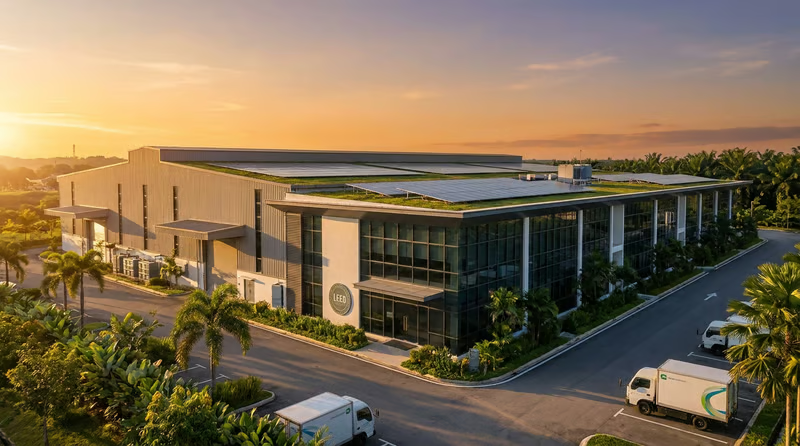
Key Takeaways
- Construction costs are rising in 2026: REHDA expects about 2-3%, industry voices expect upcoming tenders to cost 5-15% more, and higher diesel prices lifted average material costs by 12-13% (CIDB data). The effect is expected to be a moderate impact on Shah Alam and Klang warehouse rents and industrial property sale prices, but the direction of travel for rents is upward, not down.
- Bank Negara Malaysia held the Overnight Policy Rate at 2.75%, with GDP growing 5.7% in H1 2026 and headline inflation averaging just 1.8% across the first seven months, a stable financing environment for buyers and landlords.
- Construction output rose 8.8% year-on-year to RM47.8 billion in Q2 2026, confirming that industrial and infrastructure demand in the Klang Valley remains strong even as cost pressures build.
- Demand for sustainable, efficient industrial space, including green-certified warehouses, remains firm, which puts upward pressure on rents in the better-specified segment of the market.
- The practical answer for most occupiers in 2026 is not "rent or buy" in the abstract, but "rent short, buy long", lease first to protect cash flow, then acquire when you have two to three years of proven throughput data.
Warehouse for Rent Shah Alam 2026: What the 6% Build-Cost Jump Actually Means
If you are searching for a warehouse for rent Shah Alam 2026, you have probably already noticed two things: asking rents in the better-located industrial parks are not falling, and the price of building your own facility has quietly climbed again.
Rising construction costs in 2026 are the most important factor shaping that decision this year. It is not a crisis figure, but it is a compounding one, and it changes the maths on both sides of the rent-versus-buy equation.
This article breaks down what the construction cost increase means for industrial property Shah Alam 2026, what it means for occupiers looking at a factory for rent in Klang, and how to decide whether to lease or acquire in the current cycle.
What Happened: The 2026 Cost Picture, in Plain Numbers
Construction costs are rising
Estimates for 2026 vary: REHDA expects construction costs to rise about 2-3% (The Sun), industry experts told the NST that upcoming tenders could cost 5-15% more (NST), and the Economy Minister said higher diesel prices lifted average material costs by 12-13%, citing CIDB data (Malay Mail). This is expected to have a moderate impact on Shah Alam and Klang's warehouse rental and sale markets. The mechanism is straightforward: when it costs more to build, the replacement cost of existing stock rises, landlords have less incentive to discount, and developers become more selective about what they launch.
The impact lands hardest on the newest, most highly specified buildings. Rising construction costs may lead to increased rental prices for industrial properties, especially for green-certified warehouses, because demand for sustainable and efficient industrial space remains strong and tenants in that segment have fewer substitutes.
Construction output is still growing
Cost pressure has not translated into a slowdown in actual building activity. Malaysia's Q2 2026 construction output rose 8.8% year-on-year to RM47.8 billion, signalling continued sector momentum. That matters for occupiers: more new supply is coming, but it is arriving at a higher cost base, which puts a floor under asking rents.
Macro backdrop is stable
Bank Negara Malaysia kept the Overnight Policy Rate at 2.75%. The central bank reported GDP growth of 5.7% in H1 2026 and expects full-year growth of around 5%, while headline inflation averaged 1.8% in the first seven months. You can review the official monetary policy statements at Bank Negara Malaysia.
For industrial occupiers, this combination, moderate inflation, steady growth, unchanged OPR, is close to ideal. Financing costs are predictable, but there is no urgency to lock in a purchase purely to beat a rate hike.
Klang Valley industrial demand keeps compounding
Klang Valley remains Malaysia's industrial powerhouse and the most industrialised region in the country, with major clusters anchored in Shah Alam, Klang, Port Klang and the surrounding corridors. Supporting this, MIDA continues to channel manufacturing and logistics investment into Selangor, and the state remains a primary destination for both domestic and foreign industrial capital.
Additional demand signals worth noting from the wider market:
- Data centre and infrastructure spending continues to pull capital into Selangor. DayOne and TNB Power Generation agreed to assess up to 1.5 GW of dedicated on-site generation for a new Selangor data centre development, expanding DayOne's Malaysian footprint beyond Johor.
- Kerjaya Prospek secured an RM858 million MEP contract for a data centre in Iskandar Puteri, a reminder that the industrial construction supply chain is stretched, which feeds back into cost inflation for everyone else.
- Eco Business Park 7 entered a conditional sale and purchase agreement to sell two parcels of industrial land in Port Dickson to Tera Data Centers (Malaysia) for approximately RM1.01 billion, evidence of how aggressively data-centre capital is bidding for industrial land.
- Avisena Healthcare secured investment from KKR to fund expansion in Shah Alam and new Klang Valley hospitals, with planned capacity additions exceeding 300 beds.
Property prices are on a long-run uptrend
JPPH-registered industrial deals in Selangor, same park and type, 12 months to July 2026 vs the 12 before: terrace +10%, semi-D +15%, detached -13%, industrial land +6%. Shah Alam itself is softer, with terrace and semi-D factory prices both down 9%. You can track official transaction data through JPPH and NAPIC.
Developers are cautious but still launching
Malaysian property developers face pressure from rising costs, financing constraints and wider economic uncertainties. Despite this, 1H 2026 saw consistent property launches and a modest sales increase, demonstrating underlying demand. Developers are selective about future launches and many plan to expand land banks, a signal that they expect medium-term demand to hold, even if they are disciplined about near-term supply. The REHDA industry body has echoed this cautious-but-active stance.
Why Shah Alam and Klang Feel the Cost Squeeze First
Shah Alam and Klang sit at the centre of Malaysia's industrial logistics map. Three structural factors make them the first places where construction inflation shows up in rents:
1. Port proximity drives premium demand
Shah Alam's industrial sections, particularly Seksyen 16, Seksyen 22, Seksyen 26, Bukit Jelutong, Hicom Glenmarie and the Bukit Raja corridor, sit within short driving distance of Northport and Westport via the New Klang Valley Expressway (NKVE) and the Federal Highway. Port Klang throughput data is published by the Port Klang Authority, and the volume of containerised trade flowing through Westport and Northport underpins baseline warehouse demand in this corridor year after year.
2. Land is genuinely scarce
Shah Alam's prime industrial land is largely built out. New supply is concentrated in fringe locations, Bandar Bukit Raja, Meru, Kapar, and further north into Kuala Selangor and Batang Berjuntai. That scarcity means existing buildings capture the pricing power when build costs rise.
3. Tenants need higher-spec buildings
Modern warehouse users, e-commerce fulfilment, cold chain, electronics, FMCG distribution, need higher clear heights, heavier floor loading, wider turning radii and better ESG credentials than the 1990s-generation stock provides. That mismatch between what exists and what tenants want is the real source of rental pressure.
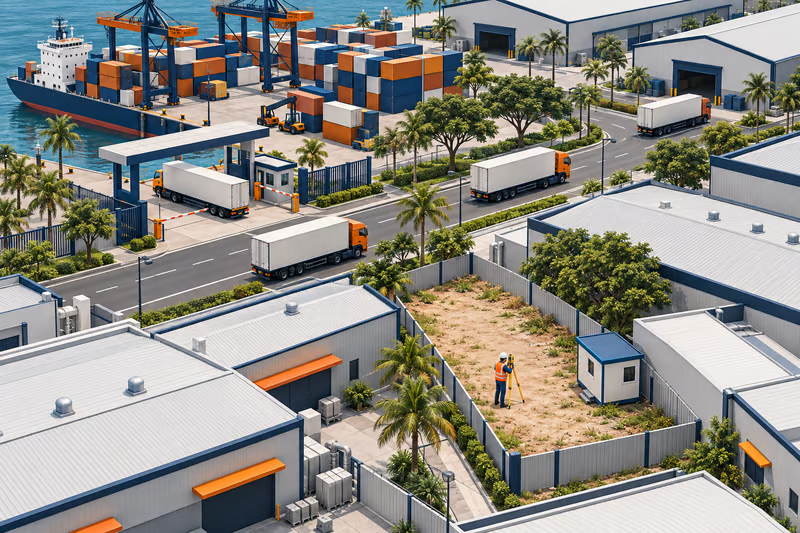
Area Comparison: Where to Look in the Shah Alam-Klang Corridor
Use this table to narrow your search based on operational priorities rather than price alone.
| Area | Highway / Access | Distance to Port Klang | Typical Facility Type Available | Best Suited For |
|---|---|---|---|---|
| Shah Alam Seksyen 16 / 22 / 26 | NKVE, Federal Highway, Kesas | Approx. 20-30 km | Detached and semi-D factories, multi-storey warehouses | Light manufacturing, distribution, regional HQs |
| Bukit Raja / Bandar Bukit Raja | NKVE, West Coast Expressway | Approx. 15-25 km | Newer detached warehouses and industrial terraces | Logistics, e-commerce, 3PL operations |
| Hicom Glenmarie / Bukit Jelutong | NKVE, Guthrie Corridor Expressway | Approx. 25-35 km | Industrial terraces, light industrial units | Engineering, precision manufacturing, tech |
| Klang / Port Klang (Northport, Westport vicinity) | Federal Highway, Pulau Indah Highway, SKVE | Adjacent to port | Container yards, port-linked warehousing, heavy industrial | Freight forwarding, import/export consolidation |
| Kapar / Meru | Federal Highway, Kapar Road | Approx. 10-20 km | Larger land parcels, detached factories, older stock | Heavy fabrication, storage, value-add processing |
Kapar and Meru remain the value end of the corridor for tenants who can trade proximity to amenities for land size and lower entry cost. See current options in the factory for rent in Kapar listings, or explore industrial land for sale Selangor if you are considering a build-to-suit.
Market Rent and Price Benchmarks: Read the Unit Column Carefully
The single most common mistake made by industrial occupiers and investors is comparing a land price against a built-up price. They are not the same number and never will be.
| Property Type | Pricing Basis | Indicative 2026 Klang Valley Range |
|---|---|---|
| Older / lower-spec detached factory or warehouse | Per built-up sq ft (RM/psf BU) | Below the registered median of RM1.55 psf/month (JPPH-registered rents, Shah Alam) |
| Standard detached or semi-D factory | Per built-up sq ft (RM/psf BU) | RM1.55 psf/month (JPPH-registered detached factory rent, Shah Alam); semi-detached RM2.12 psf/month |
| Premium new, green-certified industrial project | Per built-up sq ft (RM/psf BU) | Above the JPPH-registered median of RM1.73 psf/month (Shah Alam) |
| Detached factory (purchase) | Per land area (RM/psf land) | Median RM10.72 million, RM277 psf of land (JPPH-registered, Selangor & Kuala Lumpur) |
| Industrial land (purchase) | Per land area (RM/psf land) | Median RM69 psf of land (JPPH-registered, Selangor & Kuala Lumpur) |
Important: the ranges above are broad Klang Valley market bands for orientation only. Actual rates within Shah Alam, Klang, Kapar and Meru vary significantly by building age, clear height, power supply, floor loading, dock levellers and lease terms. Market rates vary, contact +60 17-672 9873 for current quotes on specific units.
For a square-metre conversion: RM2.00 psf BU is roughly RM21.50 per square metre per month. That conversion trips up a lot of first-time industrial tenants who are used to quoting residential or office space in square feet.
Also note that unless your tenancy agreement says otherwise, warehouse rent is a fixed cost for the duration of the lease, it does not flex with your throughput. Service charges, quit rent and assessment are usually separate line items. For official guidance on quit rent and assessment matters, refer to your local land office and LHDN for stamp duty on tenancy agreements.
Rent or Buy? A Decision Framework for 2026
There is no universal answer, but there is a correct process. Work through these four questions in order.
Question 1: How certain is your volume over the next 36 months?
If you cannot forecast your pallet throughput, headcount or container volume with reasonable confidence 24-36 months out, rent. A lease preserves optionality, and the transaction cost of exiting a lease is a fraction of the cost of selling a factory in a soft quarter.
Question 2: What is your cost of capital versus the implied yield?
With the OPR at 2.75%, industrial financing remains relatively affordable. However, the relevant comparison is not the headline lending rate, it is your total cost of capital versus the net yield you would earn by owning. If your business generates materially higher returns on working capital than industrial property yields, leasing and deploying capital into operations is usually the better call.
Question 3: Does your process require modifications?
If your operations need heavy racking, specialised flooring, extensive M&E work, cold rooms or significant power upgrades, ownership becomes more attractive. Long leases can amortise fit-out, but landlords rarely fund deep tenant-specific modifications on short tenures.
Question 4: Can you carry a vacant asset through a downturn?
Owning an industrial building in Shah Alam is a long-duration commitment. If a 12-18 month vacancy would strain your balance sheet, do not buy at the top of a construction cost cycle.
Rent vs Buy at a Glance
| Factor | Rent | Buy |
|---|---|---|
| Upfront capital | Low (deposit + stamp duty) | High (down payment, legal, stamp duty, fit-out) |
| Flexibility to relocate | High | Low |
| Exposure to construction inflation | Indirect (via rent reviews) | Direct (if you build) but capped once built |
| Balance sheet impact | Off balance sheet (operating lease) | Asset on balance sheet |
| Long-term cost certainty | Moderate, subject to renewal | High, once financed |
| Ability to customise | Limited | Full |
| Exit liquidity | N/A | Depends on market cycle and location |
The practical middle path in 2026 is rent short, buy long: take a two- or three-year lease in Shah Alam or Klang to prove your throughput and operational requirements, then acquire or build once your space demand is genuinely predictable.

What Shah Alam and Klang Owners Should Do Now
If you already own industrial property in the corridor, rising construction costs work in your favour, but only if your building competes on specification, not just location.
- Review your rents against replacement cost. With new build costs rising, well-maintained existing stock is relatively more valuable. Landlords who have not reviewed rents in 24 months may be materially below market.
- Prioritise the specification upgrades tenants actually ask about. Clear height, floor loading, loading bay count, power capacity and sprinkler coverage drive decisions more than cosmetic upgrades.
- Address energy efficiency. Rising electricity tariffs and tenant ESG mandates mean efficiency-led upgrades are increasingly a leasing differentiator. Demand for sustainable and efficient industrial space remains strong, and green-certified buildings are seeing the greatest upward rent pressure.
- Do not over-extend on new development. Construction costs are climbing and developers are already selective about launches. Phasing a new build is usually wiser than committing to full capacity in one go.
If you are evaluating an exit, note that well-located Shah Alam and Klang assets remain in demand, browse current factory for sale in Klang and factory for sale in Shah Alam comparables to benchmark your expectations before listing.
What Tenants Should Do Now
- Start your search earlier than you think you need to. Good units in Bandar Bukit Raja, Seksyen 16 and the port-adjacent Klang corridor do not sit vacant long.
- Negotiate lease term against rent. Landlords facing cost inflation value certainty. A three-year term with a defined escalation schedule is often worth a lower starting rent.
- Check the service charge, quit rent and assessment position before signing. These are separate from headline rent and can materially change your total occupancy cost.
- Verify power supply early. TNB capacity availability is a genuine constraint in parts of the corridor and can delay occupation by months.
- Do not build unless you have to. With construction costs rising, a build-to-suit in 2026 carries real cost risk. If you do build, fix as much of your cost base as possible before breaking ground.
Market Outlook for the Rest of 2026 and Into 2027
The overall industrial market remains robust. The combination of:
- steady GDP growth of around 5% for 2026,
- headline inflation of just 1.8%,
- an unchanged OPR of 2.75%,
- Q2 2026 construction output up 8.8% year-on-year to RM47.8 billion, and
- consistent property launches with a modest sales increase in 1H 2026
points to a market that is absorbing cost increases rather than stalling because of them.
For the Shah Alam and Klang warehouse market specifically, the most likely path through 2026 and into 2027 is:
- Rents hold firm to slightly up, with the strongest gains in newer, well-specified and green-certified stock.
- Capital values supported by replacement cost, since building new is now more expensive than it was 12 months ago.
- Continued supply concentration in fringe locations such as Bandar Bukit Raja, Meru and Kapar, with prime Shah Alam sections remaining tight.
- Growing competition for industrial land from data centre and logistics capital, which will keep land values firm along the corridor.
Infrastructure also continues to improve. The ECRL passenger service is targeted for December 2026, pending testing and safety approvals, and Malaysia's new 10-year housing policy targeting 1 million affordable homes signals sustained construction demand, both of which keep pressure on the contractor and materials supply chain that feeds industrial build costs.
Frequently Asked Questions
Should I rent or buy a warehouse in Shah Alam in 2026?
If your space requirement is not yet proven over a 24-36 month horizon, rent. With construction costs rising and industrial land in prime Shah Alam sections largely built out, buying at the top of a build-cost cycle carries meaningful risk. The pragmatic sequence for most occupiers is to lease in Shah Alam or Klang for two to three years, establish throughput, then acquire or build.
How much does it cost to build a warehouse in Malaysia in 2026?
Construction costs are rising in 2026, with estimates from about 2-3% (REHDA) to 5-15% for new tenders. Actual cost per square foot depends on clear height, floor loading, pile design, soil conditions, power requirements and specification level. Because these variables swing so widely, no single national number is reliable, get a project-specific quantity surveyor's estimate before committing.
How much per square metre is a warehouse in Shah Alam?
Converting from the standard market convention of psf built-up: RM2.00 psf BU equals roughly RM21.50 per square metre per month. JPPH-registered factory tenancies in Selangor & Kuala Lumpur over the 24 months to July 2026 show a median rent of RM1.52 psf per month, with typical rents from RM1.00 psf per month to RM2.22 psf per month; newer, higher-spec units usually rent above the median. Rates vary by building and location, contact +60 17-672 9873 for current quotes.
Can foreigners buy landed industrial property in Selangor?
Foreign ownership of industrial property in Selangor is subject to state authority approval and minimum-value thresholds that apply to foreign acquisitions. The rules are administratively specific and change from time to time, so any foreign buyer or foreign-controlled Malaysian company should verify the current requirements with the Selangor land office and a qualified property lawyer before committing to a purchase.
Which Shah Alam industrial areas have the best highway access?
Seksyen 16, Seksyen 22 and Seksyen 26 offer strong access to the NKVE, Federal Highway and KESAS. Bukit Raja and Bandar Bukit Raja benefit from the NKVE and West Coast Expressway. Hicom Glenmarie and Bukit Jelutong connect via the NKVE and Guthrie Corridor Expressway. For port-linked operations, the Klang and Pulau Indah areas adjacent to Northport and Westport are the closest to the container terminals.
Is now a good time to lock in a long lease in Klang or Shah Alam?
It depends on your rent expectations. With construction costs rising, landlords have less room to discount new space, so the case for locking in a longer term at a negotiated rate is reasonable. However, if you expect to expand significantly, a shorter term with an option to renew gives you more flexibility. Review the current factory for rent in Shah Alam market before you negotiate.
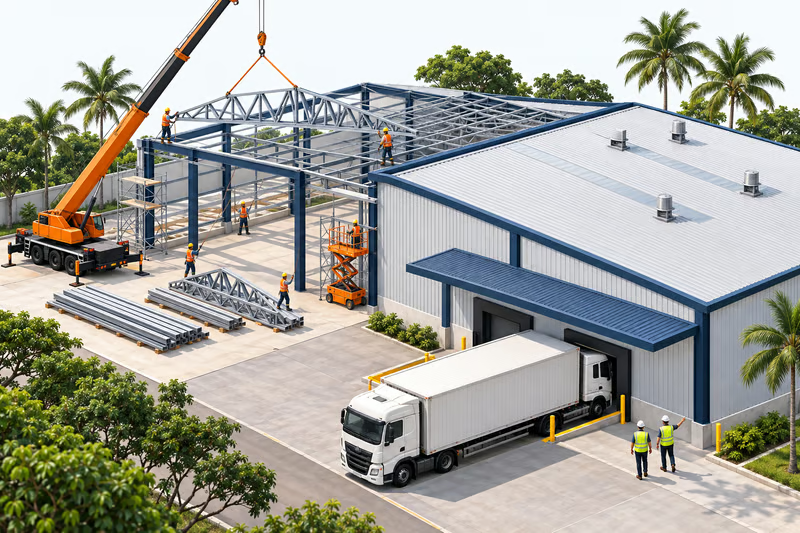
Next Step: Get a Straight Answer on Your Specific Requirement
Market averages only take you so far. What actually matters is whether a specific building in Bandar Bukit Raja, Seksyen 16, Meru or the Port Klang corridor fits your clear height, power, floor loading and budget, and whether the landlord will structure a lease that works with your cash flow.
Whether you are comparing a lease against a purchase, sizing up a build-to-suit, or simply want to know what your current rent should be in the 2026 market, contact +60 17-672 9873 for personalised advice. We work with occupiers and owners across the Shah Alam, Klang and Kapar industrial corridors every day and will give you a direct read on your options.
Sources referenced in this article: Bank Negara Malaysia monetary policy statements (bnm.gov.my); MIDA investment data (mida.gov.my); JPPH/NAPIC property market reports (jpph.gov.my); Port Klang Authority statistics (pka.gov.my); REHDA industry reports (rehda.com); LHDN stamp duty guidance (hasil.gov.my). Market rent ranges are broad Klang Valley bands for orientation only; individual property pricing varies and should be verified per transaction.
Factories and Warehouses in Port Klang
Archived catalogue records with power, ceiling height and floor loading for every unit: