Factory Sale and Leaseback in Malaysia: How It Works, Who Buys, Rent, Tax and Risks
A sale and leaseback lets a factory owner sell the building and stay as tenant, turning property into cash. How it works in Malaysia, who buys, how rent and lease terms are set, RPGT and stamp duty, and the risks.
Key Takeaways
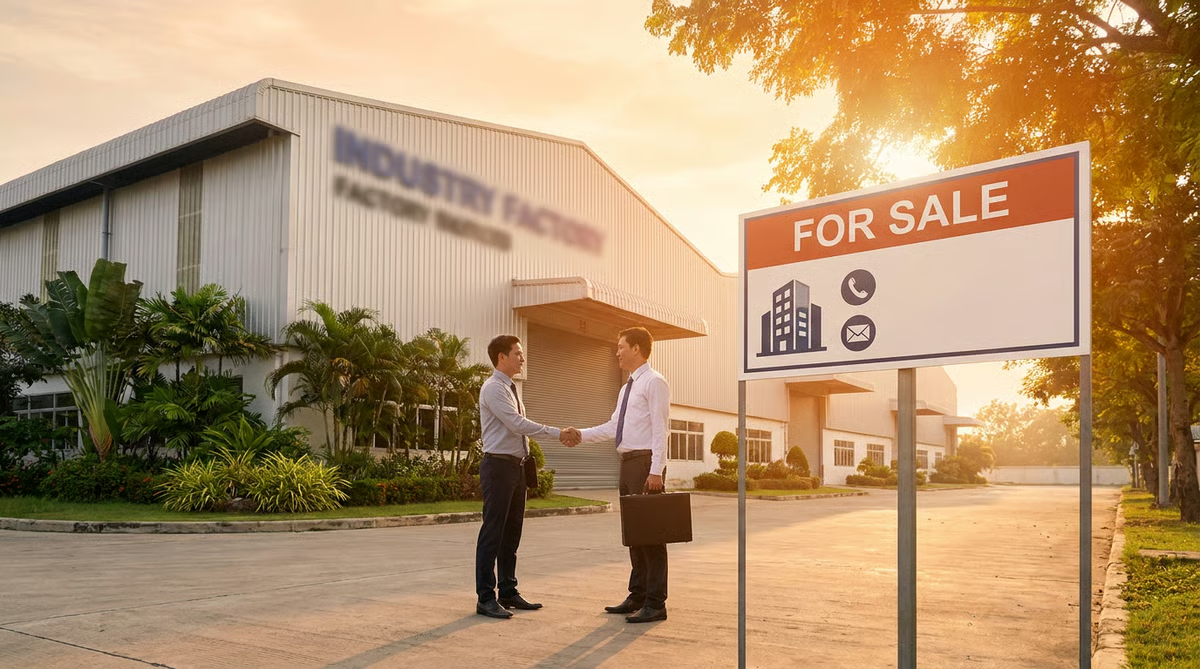
- A sale and leaseback means you sell your factory to an investor and sign a lease at the same time, so operations continue while the capital tied up in the building is released.
- Buyers are mostly REITs, funds and private investors who want a tenant from day one. In 2024 Axis REIT bought a Bukit Raja factory complex for RM49 million with a six-year leaseback at RM285,833 a month, The Edge reported.
- Price and rent are linked. A higher price usually means a higher rent; the buyer is pricing the income, so your covenant and the lease length matter as much as the building.
- Tax still applies. The seller pays RPGT on any gain (10% for a Malaysian company after five years), the buyer pays transfer stamp duty, and the lease is stamped too.
- You give up control and any future gain on the property, and take on rent for the length of the lease.
How does a factory sale and leaseback work?
- The owner-occupier decides what to release: the whole site, or a building on a larger site if the title allows.
- Terms are agreed as one package: price, lease length, starting rent, rent reviews, repair and insurance duties, and options to renew or buy back.
- The SPA and lease are signed together, and the sale completes with the lease starting on completion.
- The seller stays in occupation as tenant and pays rent from day one.
It is common in Malaysia's industrial market. Besides the Bukit Raja deal above, Axis REIT agreed in 2024 to buy the Amsteel Mills complex and storage yard in Bukit Raja for RM351.8 million with a RM1.83 million monthly leaseback (The Edge). Smaller deals happen privately with individual investors.
Why owners do it
- Release cash for machinery, expansion or debt without a new loan.
- Move the building off the balance sheet's main risk, so the business focuses on production.
- Keep operating in the same place, with no relocation, power upgrade or re-approval.
- Lock in occupancy for a known term, often with renewal options.
Who buys and what they check
| Buyer | What they want | What they check |
|---|---|---|
| REITs | Long leases, strong tenants, good locations | Tenant's financial strength, title, CCC, building condition, lease terms |
| Funds and institutions | Portfolio fit, yield | Same, plus land size and redevelopment value |
| Private investors | Steady rent, often smaller units | Rent level against market, tenant history |
Expect due diligence on the title, the CCC and approvals, the fire certificate where required, flood history and environmental issues. Our factory due diligence checklist covers what a buyer will ask for.
How the price and rent are set
The buyer values the factory mainly on the rent it will receive. That links the two numbers: if you want a higher price, the buyer will usually want a higher rent or a longer lease. For context, Axis REIT's Bukit Raja deal worked out at about a 7% gross yield, and Malaysian REITs yielded about 5.2% in June 2026 (The Star). Our industrial rental yield guide explains how yield is worked out.
Check the rent against the open market. A rent far above market inflates the price on paper but costs you every month; a rent far below market makes the price lower. Registered rents for comparable factories are on our industrial transactions page.
Lease terms to negotiate
- Length, matched to how long you need the site.
- Rent reviews: fixed steps or a formula, not open market at the landlord's choice.
- Repairs and insurance: many leasebacks put repairs, outgoings and building insurance on the tenant. Price that in. See who insures what between landlord and tenant.
- Options to renew and, if possible, a right of first refusal or an option to buy back.
- Alterations: the right to add machinery, a mezzanine or a TNB upgrade without unreasonable refusal.
- Assignment and subletting, if the business may be sold or restructured.
- Registration: a lease of more than three years should be registered at the land office.
Tax and costs
| Item | Who pays | Notes |
|---|---|---|
| RPGT on the gain | Seller | Malaysian company: 30% within 3 years, 20% in year 4, 15% in year 5, 10% from year 6; buyer retains part of the price. See our RPGT guide |
| Transfer stamp duty | Buyer | On the price; see our stamp duty guide |
| Lease stamp duty | Tenant unless agreed | On annual rent by term; see our tenancy stamp duty guide |
| Legal fees | Each side | Plus valuation and due diligence costs |
| SST on rent | Tenant | If the new landlord is SST-registered |
How the deal is shown in the company's accounts follows the leasing standard (MFRS 16) and is a question for your auditor, not your agent.
Risks
- You lose any future gain on the property and the land.
- Rent is a fixed cost for the whole term, in good years and bad.
- At expiry the landlord decides unless you have a renewal option.
- Repairing leases can be expensive on an older building.
- A weak covenant lowers the price: buyers price your business risk.
Is it right for you?
It suits owner-occupiers with a stable business, a building that fits their long-term needs, and a better use for the cash. It suits less well if you may move within a few years, or if the site has redevelopment value you want to keep. If you are weighing a leaseback against an outright sale, our guide to selling a factory and valuation guide are the place to start.
FAQ
What is a sale and leaseback of a factory?
You sell the factory to an investor and lease it back at the same time, so you keep operating there as tenant while releasing the capital in the building.
Who buys factories on sale and leaseback in Malaysia?
Mostly REITs, investment funds and private investors who want a tenant in place from the start.
How is the rent set in a leaseback?
It is negotiated with the price. Buyers value the factory on its rent, so a higher price usually needs a higher rent or a longer lease. Compare the rent with market rents for similar factories.
Do I pay RPGT on a sale and leaseback?
Yes, on any gain, as with any sale. A Malaysian company pays 10% from the sixth year of ownership, more if sold sooner.
Can I buy the factory back later?
Only if the lease includes an option to buy back or a right of first refusal. Negotiate it at the start.
Should a leaseback lease be registered?
A lease of more than three years should be registered at the land office so it binds any later owner.
Buying or renting, talk to us
Send us the numbers that decide the shortlist: required amps, built-up area, floor loading, preferred area and target date. We reply with what actually exists, including units that are not advertised publicly. For 800A to 4,000A+ requirements, see high-power factories in Selangor.
| Agent | Licence | Mobile / WhatsApp | |
|---|---|---|---|
| Adam | 60176729873 | +60 17-672 9873 | |
| Yuki | 60167724476 | +60 16-772 4476 |