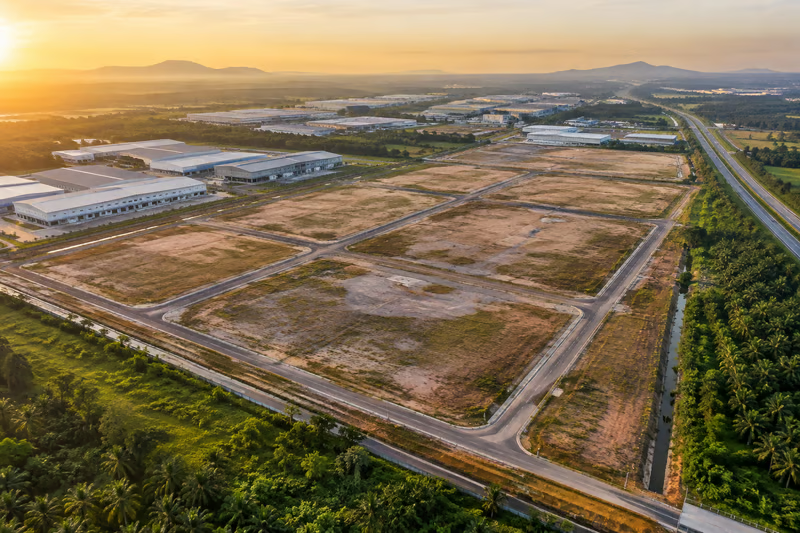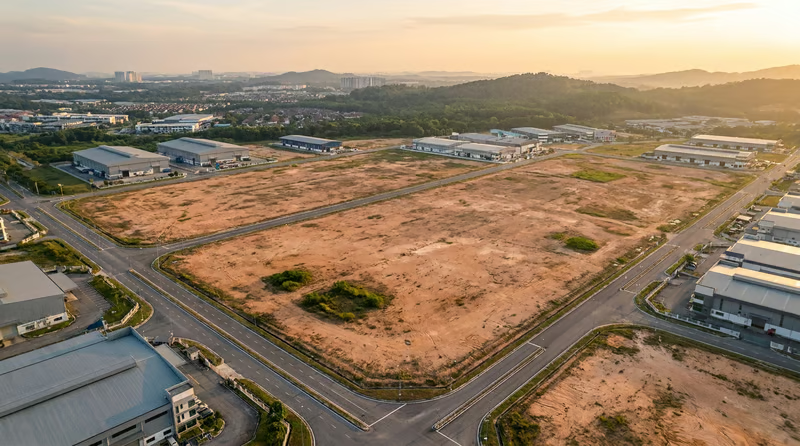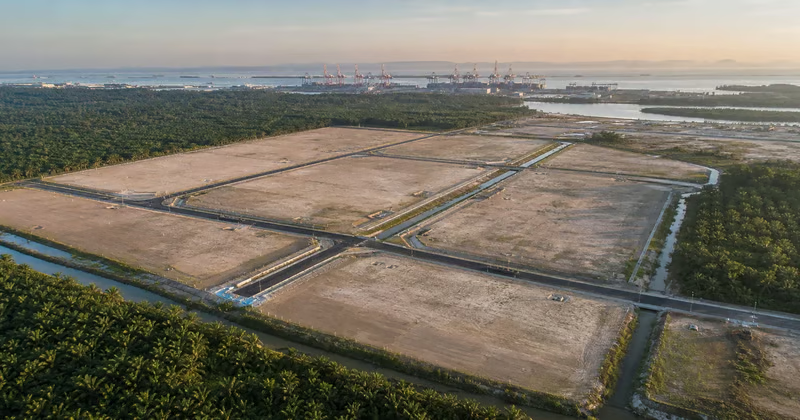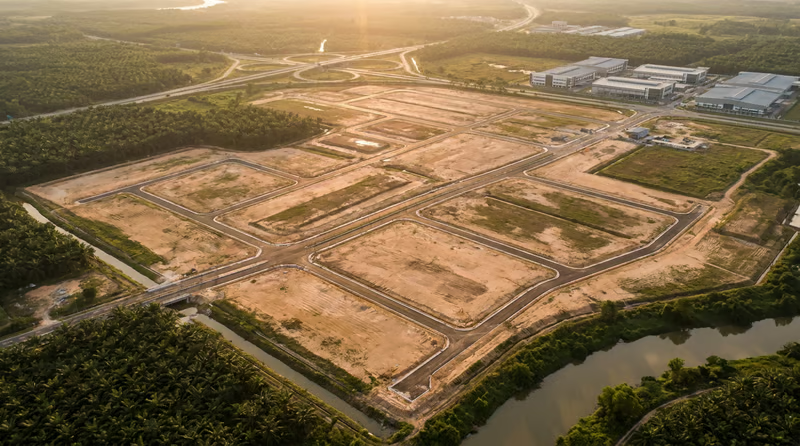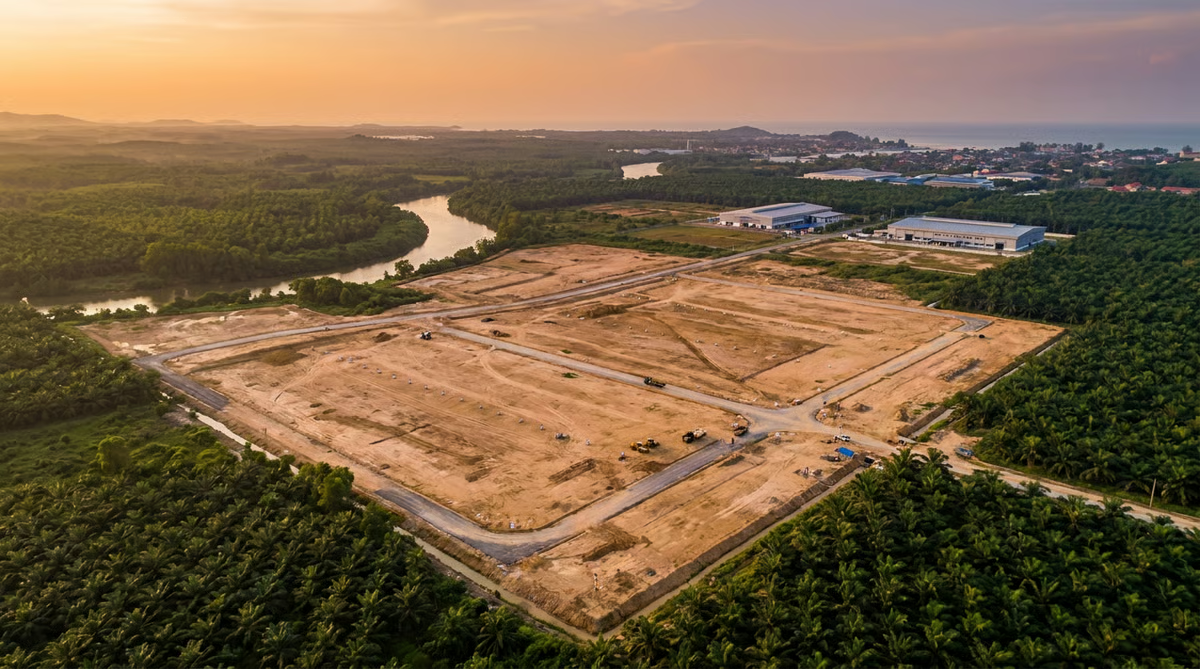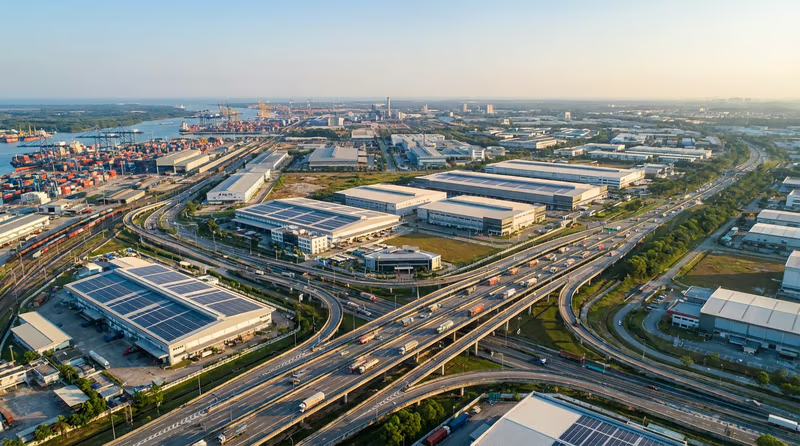
Industrial Land Conversion in Malaysia: How to Change Land Use for a Factory (2026 Guide)
Learn the complete process of industrial land conversion in Malaysia for 2026. This guide covers application steps, costs, premiums, timelines, and legal requirements to change agricultural land to industrial use for a factory.
Key Takeaways
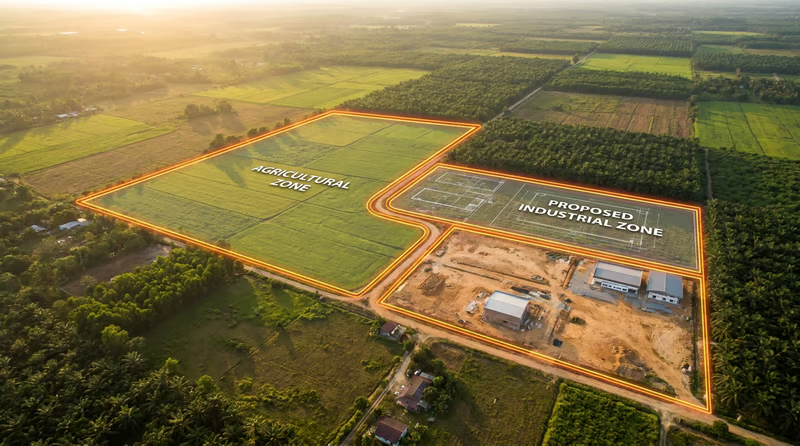
- Land conversion is a legal requirement under the National Land Code 1965, and failing to convert agricultural land to industrial use can result in penalties, retroactive premium claims, or forfeiture by the State Authority.
- The land use category on the title determines what you can build, market value, and rates for quit rent and assessment taxes, so using land outside its designated category is a breach of title conditions.
- Converting to industrial land ensures compliance with local council regulations, increases asset value and borrowing power, and is necessary for bank loans and obtaining business licenses, fire safety approvals, and environmental impact assessments.
- The application process involves multiple government agencies, primarily the State Land Office and State Planning Department, and starts with a pre-consultation and feasibility study by a professional consultant.
- While specific rates and regulations vary by state, the principles of the conversion process remain similar across Johor, Selangor, and Penang.
Industrial Land Conversion in Malaysia: How to Change Land Use for a Factory (2026 Guide)
For manufacturers and investors looking to build a new facility, securing the right plot of land is only half the battle. The other half involves navigating the legal framework that governs what you can actually build on that land. If you have purchased agricultural land with the intention of building a factory, you must undergo an industrial land conversion malaysia process. This is a legal requirement under the National Land Code 1965, and failing to do so can result in hefty penalties, retroactive premium claims, or even forfeiture of the land by the State Authority.
This comprehensive 2026 guide breaks down the entire process, from understanding what land conversion is, to calculating the premiums, and managing the timeline. Whether you are looking at states like Johor, Selangor, or Penang, the principles remain similar, though specific rates and regulations vary by state. By the end of this article, you will know exactly how to change your land use to industrial and avoid costly legal pitfalls.
What Is Land Conversion (Tukar Syarat Tanah)?
In Malaysia, every piece of alienated land has a designated category stated on its title document. This category is typically one of the following: agriculture, residential, commercial, or industrial. Land conversion, known locally as tukar syarat tanah, is the legal process of changing this designated use.
Why does this matter for factory owners? The land use category directly determines:
- What you can build: You cannot legally construct a factory on land designated for agriculture.
- Market value: Industrial and commercial land is valued significantly higher than agricultural land.
- Taxes and quit rent: Different categories attract different rates of quit rent and assessment taxes.
Using land outside its designated category is a breach of the express conditions of the land title. According to the National Land Code 1965, the State Authority can forfeit the land if these conditions are breached. Therefore, any landowner must apply to change the category of land use to avoid violating these conditions.
Why Convert to Industrial Land?
The primary reason for industrial land conversion malaysia is to legally operate a factory. However, there are other strategic benefits:
- Compliance: It ensures your operations are legal and compliant with local council (PBT) regulations.
- Asset Value: Industrial land typically commands a higher market value than agricultural land, increasing your asset base and borrowing power with financial institutions.
- Financing: Banks are unlikely to approve loans for factory construction on land that is not zoned for industrial use.
- Business Operations: You will need the correct zoning to obtain the necessary business licenses, fire safety approvals, and environmental impact assessments (EIA) required to operate a factory.
The Application Process: Step-by-Step
The process to change land use involves several government agencies, primarily the State Land Office and the State Planning Department. Here is the step-by-step approach to submitting a successful application.
Step 1: Pre-consultation and Feasibility Study
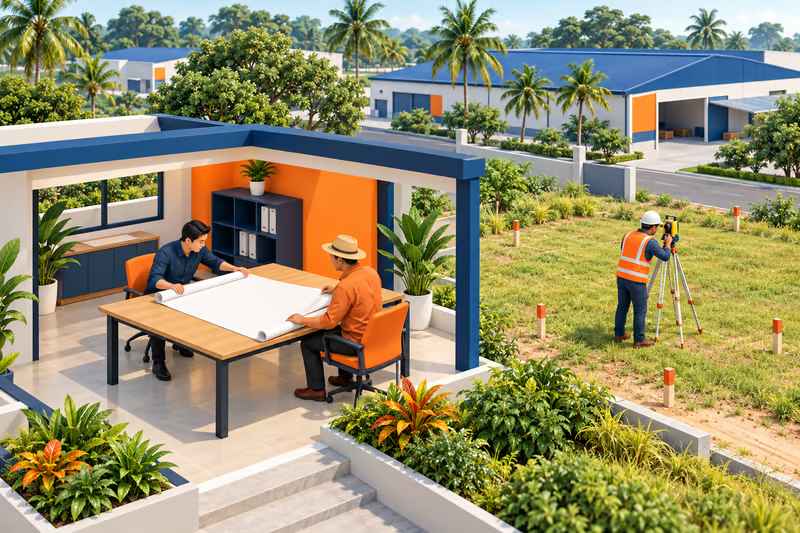
Before submitting any paperwork, engage with a professional consultant (a town planner or land surveyor). They will conduct a feasibility study to determine if your proposed industrial use is in line with the Local Plan (Rancangan Tempatan). This pre-consultation phase is critical to identify potential red flags early.
You must also engage the Department of Valuation and Property Services (JPPH) if you are planning to change your land use category. According to JPPH, they are the authority responsible for assessing the market value of the land, which is the basis for calculating the conversion premium.
Step 2: Prepare Necessary Documents
Once the feasibility study is complete, gather the required documentation. The standard checklist includes:
- A certified copy of the land title (Geran/CT).
- Current quit rent and assessment receipts.
- Authorization letters from all interested parties (if the land is jointly owned).
- Contact details of the applicant.
- Site plan and location plan.
- A detailed project proposal outlining the intended industrial use, project timeline, and expected benefits.
- Feasibility study findings.
Step 3: Submit Application to the State Land Office
Submit the land conversion application to the State Land Office (Pejabat Tanah dan Galian) where the land is located. The application must include the project proposal and all supporting documents. The State Authority will then review the application, often consulting with the Town and Country Planning Department (PLANMalaysia) and the local district council.
Step 4: Approval and Premium Payment
If the application is approved, the State Authority will issue a letter of approval with the conditions for conversion. The primary condition is the payment of the land conversion premium. Once the premium is paid, the land title will be updated to reflect the new industrial category.
Timeline: How Long Does It Take?
The duration of an industrial land conversion malaysia process varies significantly based on the complexity of the case and the state government's efficiency. Based on industry data, here is a realistic timeline breakdown:
| Stage | Duration |
|---|---|
| Pre-consultation & preparation | 2 to 4 weeks |
| Application submission to decision | 6 to 18 months |
| Premium payment & title update | 1 to 3 months |
| Total | 8 to 22 months |
The biggest variable is the State Authority review. Simple conversions, such as agriculture to residential in a designated growth area, may be approved in 6 months. Complex ones, such as agriculture to industrial in a sensitive environmental area, can take 18 months or more. Approvals can take 6 to 12 months depending on land status and state factors, but industrial conversions often fall on the longer end of that spectrum due to stricter controls.
How Much Does It Cost? (Premium and Fees)
The cost of converting land is the most critical factor for budgeting. There are two main cost components: the land premium and administrative fees.
Land Conversion Premium
The land premium is the largest cost. It is calculated based on the difference in land value between the current use (agriculture) and the proposed use (industrial). The formula used by the State Authority is:
- Identify the market value of the land upon approval (assessed by JPPH).
- Identify the premium rate for conversion (a percentage set by the state).
- Multiply the market value by the premium rate.
For example, if the market value of your land upon approval is RM 5 million, and the premium rate for agriculture to light industrial is 20%, the premium payable is RM 1 million (RM 5 million x 20%).
Here are typical premium rates per square foot for various conversion types in Malaysia:
| Conversion Type | Typical Premium (RM per sq ft) |
|---|---|
| Agriculture to Residential | RM 5 to RM 15 |
| Agriculture to Commercial | RM 10 to RM 30 |
| Agriculture to Industrial | RM 8 to RM 25 |
| Residential to Commercial | RM 5 to RM 20 |
Note: In Selangor, specific rates are 30% for agriculture to industrial, 20% for light industrial, and 25% for medium industrial.
Example Calculation:
Converting a 1-acre (43,560 sq ft) agricultural plot to commercial use at RM 15 per sq ft would result in a premium of RM 653,400. Industrial conversions are often slightly cheaper than commercial but still represent a significant capital outlay.
Other Fees and Charges
Beyond the premium, you must budget for administrative and professional fees:
| Fee Type | Amount |
|---|---|
| Application processing fee | RM 100 to RM 500 |
| Survey fees (if resurvey needed) | RM 3,000 to RM 10,000 |
| Planning approval fee | RM 500 to RM 2,000 |
| Professional fees (consultant) | RM 5,000 to RM 20,000 |
What Gets Approved and What Doesn't?
Not all applications are approved. The State Authority has strict criteria for approving industrial land conversion malaysia requests. Understanding these factors can help you assess your chances before submitting an application.
Factors That Help Approval
- Location: The land is located within or adjacent to an industrial zone designated in the Local Plan.
- Accessibility: The land has good access to main roads and highways for logistics.
- Infrastructure: Availability of utilities such as water, electricity, and sewage.
- Environmental Impact: The proposed factory does not pose a significant risk to the environment or nearby residential areas.
Factors That Hinder Approval
- Land Use Conflict: The land is in an area designated for agriculture or residential use, and the conversion would disrupt the local community.
- Sensitive Areas: The land is located in environmentally sensitive areas, such as water catchment zones or forest reserves.
- Traffic Congestion: The proposed factory would cause severe traffic congestion in the surrounding area.
- Incomplete Documentation: Failure to provide all necessary documents or a weak project proposal.
Land Conversion vs. Land Subdivision
It is common for landowners to confuse conversion with subdivision. While they often go hand in hand, they are distinct processes:
- Land Conversion: Changes the category of use (e.g., from agriculture to industrial).
- Land Subdivision: Divides a single large piece of land into smaller parcels.
If you are buying a large agricultural estate to develop an industrial park, you will likely need to do both: first, subdivide the land into individual factory plots, and second, convert the category of those plots to industrial. Each process has its own application forms and fees.
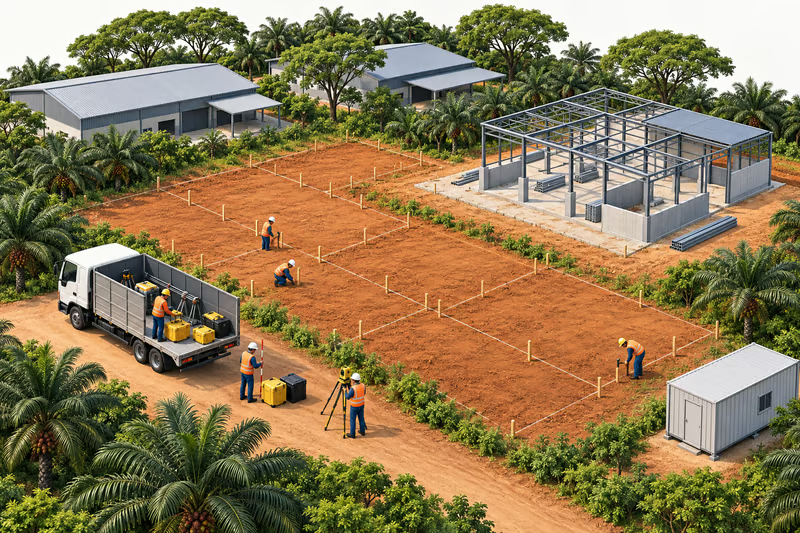
Penalties for Unauthorised Use
Conducting industrial activities on agricultural land without approval is a serious offense. The State Authority can take the following actions:
- Enforcement Action: Issuing stop-work orders and fines.
- Retroactive Premium Claims: Demanding payment of the conversion premium with penalties, even if the conversion is eventually approved.
- Forfeiture: In extreme cases, the State Authority can forfeit the land entirely.
To avoid these risks, always ensure your land conversion is approved before starting construction or operations.
In Selangor, factories already operating on agricultural land without conversion fall under the State's KTK programme, which runs to 31 December 2027 with 30% off the conversion premium. Owners served Notice 7A have 12 months to apply; see our Selangor unauthorised factory (KTK) programme guide.
State-Specific Considerations: Johor and Selangor
While the National Land Code provides the federal framework, land administration is a state matter. This means the premium rates and processing times differ.
- Johor: Johor has been aggressive in promoting industrial development, particularly in areas like Iskandar Malaysia. The state has streamlined some processes, but conversions in sensitive areas like forest reserves are strictly scrutinized. According to the Johor Land Conversion & Zoning Guide, the timeline can extend to 18 months for complex cases.
- Selangor: Selangor has a structured premium rate. As mentioned, the rate for agriculture to light industrial is 20%, and for medium industrial it is 25%. The Selangor State Land Office is known to be strict on compliance with the Local Plan.
Finding the Right Factory Space
If the conversion process seems too lengthy or costly for your timeline, you might consider purchasing or renting existing industrial properties. This bypasses the conversion process entirely, allowing you to start operations immediately. If you are looking for ready-to-use facilities, you can browse factory listings in key industrial hubs like Port Klang, or rent factories to test the market before committing to a large capital expenditure.
The Role of Professional Consultants
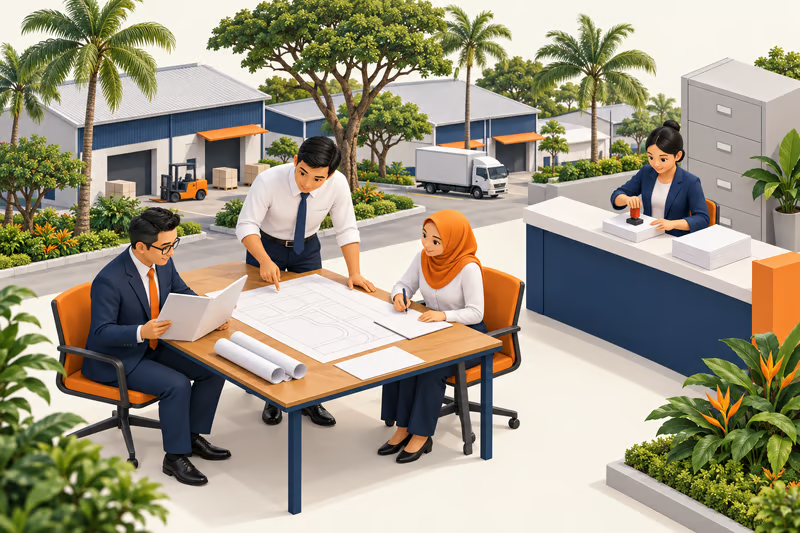
Given the complexity of the legal framework, engaging a professional is highly recommended. A town planner or land consultant can:
- Conduct the feasibility study.
- Prepare the necessary reports and documentation.
- Liaise with the State Land Office and JPPH.
- Calculate the expected premium to help you budget.
Legal assistance is also recommended. Owing to the complexity, expert legal or town planning guidance can expedite processes and limit errors.
Economic Context for Industrial Land in 2026
The demand for industrial land in Malaysia remains robust, driven by the growth in logistics, e-commerce, and semiconductor manufacturing. According to the Malaysian Investment Development Authority (MIDA), approved investments in the manufacturing sector continue to rise, putting pressure on the supply of industrial land. This economic context means that the State Authority is generally receptive to genuine industrial development proposals, as they bring jobs and economic growth.
However, this also means that the premium rates are likely to increase as land values appreciate. It is advisable to lock in your conversion application as soon as possible if you have identified a suitable plot.
Comparing land beyond this area? Our industrial land for sale in Selangor guide compares price per sq ft by district, zoning checks, loans and buying costs.
Whatever the price, start with the title: our land search guide (carian rasmi on e-Tanah Selangor) shows how to check the land category, express conditions and encumbrances before you pay a deposit.
For the full sequence of permits, from land use to the operating licence, see our factory approvals map for Malaysia.
Frequently Asked Questions (FAQ)
1. Can I convert agricultural land to industrial land in Malaysia?
Yes, you can. You must submit an application to the State Land Office, pay the conversion premium, and obtain approval. The process typically takes 6 to 18 months for approval, depending on the state and the complexity of the project.
2. How much does it cost to convert agricultural land to industrial?
The cost varies by state and location. The premium is calculated based on the market value of the land and the premium rate (e.g., 20% to 30% in Selangor). Typically, the premium ranges from RM 8 to RM 25 per square foot for agriculture to industrial conversion. Additional fees include processing fees (RM 100 to RM 500) and professional consultant fees (RM 5,000 to RM 20,000).
3. What is the penalty for using agricultural land for industrial purposes?
Using land outside its designated category is a breach of the National Land Code 1965. The State Authority can impose enforcement action, claim retroactive premiums, or forfeit the land. It is illegal to build a factory on agricultural land without conversion approval.
4. How long does land conversion take in Malaysia?
The total process takes between 8 to 22 months. This includes 2 to 4 weeks for preparation, 6 to 18 months for the State Authority review, and 1 to 3 months for premium payment and title update.
5. What is the difference between land conversion and land subdivision?
Land conversion changes the land use category (e.g., from agriculture to industrial). Land subdivision divides a large piece of land into smaller parcels. You may need to do both if you are developing an industrial park.
6. Who calculates the land premium?
The Department of Valuation and Property Services (JPPH) assesses the market value of the land. The State Authority then applies the premium rate to this value to calculate the conversion premium.
How do I convert agricultural land to industrial land in Malaysia?
To convert agricultural land to industrial land in Malaysia, start with a pre-consultation and feasibility study by a professional consultant such as a town planner or land surveyor, then submit your application to the State Land Office where the land is located. The application must include a certified copy of the land title, current quit rent and assessment receipts, authorization letters from all interested parties, a site plan and location plan, a detailed project proposal, and the feasibility study findings. If approved, the State Authority issues a letter of approval with conditions, and once the land conversion premium is paid, the land title is updated to reflect the new industrial category.
Conclusion
Navigating the industrial land conversion malaysia process requires patience, capital, and a thorough understanding of the National Land Code 1965. While the timeline can stretch to nearly two years, the payoff is a legally compliant, high-value asset that can support your manufacturing operations for decades. Always engage professional consultants to guide you through the process, and ensure your project proposal aligns with the state's Local Plan to increase your chances of approval.
Contact Adam or Yuki to discuss your requirements. Confirm the available service, scope and terms directly before proceeding.
Ready to secure your industrial property?
Contact our team today for expert advice on factory purchases and rentals.
Contact +60 17-672 9873 (Adam) or +60 16-772 4476 (Yuki)
Factories and Warehouses in Port Klang
Archived catalogue records with power, ceiling height and floor loading for every unit: