Freehold vs Leasehold Factory in Malaysia: Key Differences, Price, Loans and Renewal
Freehold vs leasehold for factories and industrial land in Malaysia: what a 60 or 99-year lease means, how Selangor prices a renewal, how banks treat the remaining lease, and what JPPH data shows about the price gap.
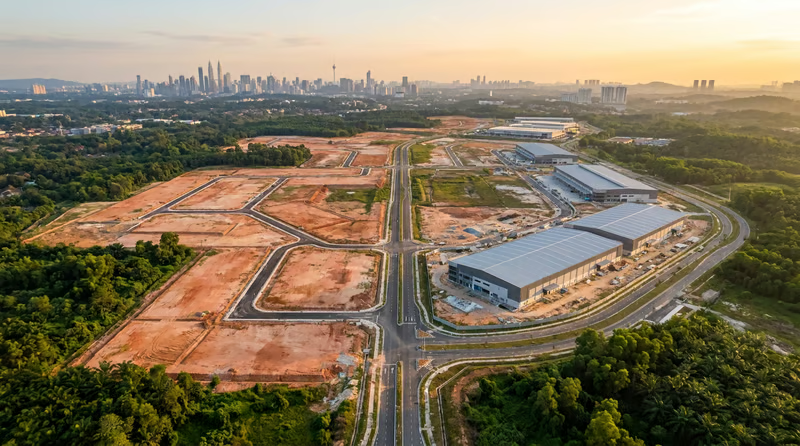
Key Takeaways
What is the difference between a freehold and leasehold factory in Malaysia? A freehold factory title has no expiry, while a leasehold factory title runs for a fixed term, often 60 or 99 years, and the land returns to the State unless the lease is renewed for a premium. The years left decide the loan, renewal bill and resale price.
- Freehold land is held in perpetuity. Leasehold land is held for a fixed term written on the title, usually 60 or 99 years for industrial land, and goes back to the State when the term ends unless it is renewed.
- In JPPH-registered factory transfers across Selangor and Kuala Lumpur in the 24 months to August 2026, about 61% were freehold (1,768 deals) and 39% leasehold (1,116 deals). The median price was RM1.8 million for freehold and RM1.77 million for leasehold, so tenure alone does not set the price.
- Where both tenures trade in the same area, freehold usually sells higher: Kapar RM3 million vs RM980,000, Nilai RM1.5 million vs RM636,000, Subang RM2.4 million vs RM1.44 million (median prices, which also mix size and type).
- Renewing a lease in Selangor is not automatic. The State sets a premium on the land value (not the building), and Selangor's published scale for leasing industrial land is 3/4 of 1% of the land value for each year of the term.
- What drives loans and resale is the remaining lease. A bank will not lend past the expiry date, and the next buyer's bank applies the same test, so a short lease narrows your exit.
This guide is general information, not legal or tax advice; confirm your own title with a lawyer and the land office.
The difference between freehold and leasehold in Malaysia is time. A freehold title has no expiry; a leasehold title gives you the land for a fixed term, commonly 99 years, after which it returns to the State unless you pay a premium to renew. For a factory buyer the practical question is how many years remain, because that number decides the bank loan, the resale price and the renewal bill.
What freehold and leasehold mean under the National Land Code
Land in Peninsular Malaysia is governed by the National Land Code (Act 828). Section 76 sets the rule for new grants: State land is alienated for a term not exceeding 99 years, and in perpetuity only where the Federal Government requires it, where the land is for a public purpose, or where the State is satisfied that special circumstances apply. Existing freehold titles stay freehold, which is why older estates hold most of the freehold stock. That gives the two tenures you see on a title:
- Freehold (pegangan bebas, "selama-lamanya"): the land is held in perpetuity. The owner still pays annual quit rent and must keep to the category of land use and express conditions on the title.
- Leasehold (pajakan): the land is held for a term with a start and an expiry date printed on the title. During the term the owner can sell, charge or lease it like freehold land, subject to any restriction in interest. At expiry the land reverts to the State.
"Leasehold meaning" in one line: you own the land for the years left on the lease, not forever. A 99-year industrial lease granted in 1990 has about 63 years left in 2026, and that remaining figure is what banks and buyers price.
Freehold and leasehold are about time. They are not the same as individual title versus strata title, which is about what you own (a whole lot or a parcel in a scheme). A strata factory can be freehold or leasehold; our strata title vs individual title guide covers that side.
Typical lease terms: 60 and 99 years
For industrial land in Selangor the common terms are 60 and 99 years. A PTG Selangor circular from 1986 (Pekeliling PTG Selangor 3/1986) records the State changing industrial sites developed by PKNS from 60-year to 99-year leases, so both terms appear in older estates. Port-side estates such as Pulau Indah and Telok Gong trade only as leasehold in the transaction data further down.
Freehold vs leasehold factory: side-by-side comparison
| Freehold factory | Leasehold factory | |
|---|---|---|
| Ownership of the land | In perpetuity | For the years left on the lease |
| New grants under section 76 | Only in special cases | The normal rule, up to 99 years |
| At the end of the term | Not applicable | Land reverts to the State unless renewed |
| Renewal premium (Selangor) | None | Charged on land value, 3/4 of 1% per year of term; building not charged |
| Quit rent | Yes, yearly | Yes, yearly |
| Category and conditions | Apply | Apply |
| Restriction in interest | Possible | Common |
| Loan margin | Set by the bank on the valuation | Same products, but applied to a lower valuation as the lease shortens |
| Loan tenure | Limited by borrower age and building | Also cannot run past the lease expiry |
| Resale | Wider pool of buyers | Narrows as the lease shortens |
| Stamp duty and legal fees on transfer | Same scale | Same scale |
How leasehold renewal works in Selangor
There is no automatic right to renew. The owner applies to the district land office (Pejabat Tanah Daerah, PTD), the land is valued, the State decides, and if it approves, a premium notice is issued that must be paid before the new term is endorsed.
A 2013 explainer reported by theSun (reprinted by Low & Partners) set out the route Selangor has used: the owner surrenders the title and the State re-alienates the land for a new term, relying on sections 197 and 204B of the Code, with the land valued by JPPH and a premium notice (Form 5A) issued on approval. The same piece notes that the premium is charged on the land, not the building on it.
How the renewal premium is worked out
Selangor publishes its premium scales through PTG circulars. The scale for alienating industrial land for a term is 3/4 of 1% of the market value of the land for each year of the term (PTG Selangor circular 2/1987, Lampiran B-1). A later circular writes it as a formula, 3/4 x 1/100 x term x land value (PTG Selangor circular 6/2001). Renewals are commonly priced on the years being added (the new term minus the years still left).
Illustration only, using that scale. The land value is the median of JPPH-registered industrial land transfers in Selangor and Kuala Lumpur (RM69 psf of land, 24 months to August 2026, from our Selangor industrial transaction data):
| Item | 40 years left | 25 years left |
|---|---|---|
| Land area | 1 acre (43,560 sq ft) | 1 acre (43,560 sq ft) |
| Land value at RM69 psf of land | RM3,005,640 | RM3,005,640 |
| Years added to reach 99 | 59 | 74 |
| 3/4% x years | 44.25% | 55.5% |
| Premium before any rebate | about RM1.33 million | about RM1.67 million |
The real figure comes from the State's own valuation and the notice it issues, and it can be lower if a rebate is granted. Two things are clear from the arithmetic: renewal is a large cost on land with a high value, and it grows with every year you wait. Selangor's well-known RM1,000 renewal scheme was for owner-occupied homes and does not cover factories. The Menteri Besar told the state assembly in 2024 that the State was studying cheaper lease extensions, especially for commercial property (FMT, August 2024); ask the PTD what applies to industrial land when you apply.
Outside Selangor: Negeri Sembilan and Kuala Lumpur
The premium scale above is Selangor's. Each State sets its own premium and renewal rules, so a leasehold factory in Nilai follows Negeri Sembilan's land office, and Kuala Lumpur is Federal Territory land, where the Code applies with modifications. The questions to ask are the same everywhere: how many years are left, what the State charges to add years, and whether the title carries a restriction in interest.
Can leasehold be converted to freehold?
Not as a routine step. Selangor's published procedures deal with renewing a lease or re-alienating the land for a new term, not with turning a lease into freehold. Treat a leasehold factory as leasehold for as long as you own it, and confirm any other option in writing with the PTD.
Price: is leasehold really cheaper?
Often, but not always. These are median prices of JPPH-registered factory transfers (land-only deals excluded) for the 24 months to August 2026, as recorded in the registered data so far. Each median mixes location, size and factory type, not tenure alone:
| Area | Freehold deals | Freehold median | Leasehold deals | Leasehold median |
|---|---|---|---|---|
| Selangor & Kuala Lumpur | 1,768 | RM1.8 million | 1,116 | RM1.77 million |
| Klang & Port Klang | 451 | RM1.78 million | 185 | RM500,000 |
| Kapar | 247 | RM3 million | 57 | RM980,000 |
| Pandamaran | 44 | RM1.45 million | 11 | RM4 million |
| Subang & Glenmarie | 71 | RM2.4 million | 90 | RM1.44 million |
| Gombak District | 293 | RM3.63 million | 72 | RM3.3 million |
| Nilai, Labu & Enstek | 219 | RM1.5 million | 42 | RM636,000 |
| Shah Alam | 136 | RM3.36 million | 22 | RM5.92 million |
| Sungai Buloh & Kota Damansara | 12 | RM5.6 million | 128 | RM3.5 million |
| Telok Panglima Garang & Jenjarom | 46 | RM5.85 million | 22 | RM4.89 million |
Three readings matter:
- Freehold is the norm, not a rarity. About 61% of the registered factory transfers in Selangor and Kuala Lumpur in the period were freehold.
- Where both trade in similar estates, freehold usually costs more. The gap is clear in Kapar, Subang and Nilai, and small in Gombak.
- A median mixes building age, type and estate. In Shah Alam leasehold is higher (RM5.92 million against RM3.36 million), and so is Pandamaran (RM4 million against RM1.45 million), because newer leasehold estates with larger buildings sell well and the mix of factory sizes differs. Compare like with like: same estate, same factory type, similar remaining lease.
How banks treat a leasehold factory
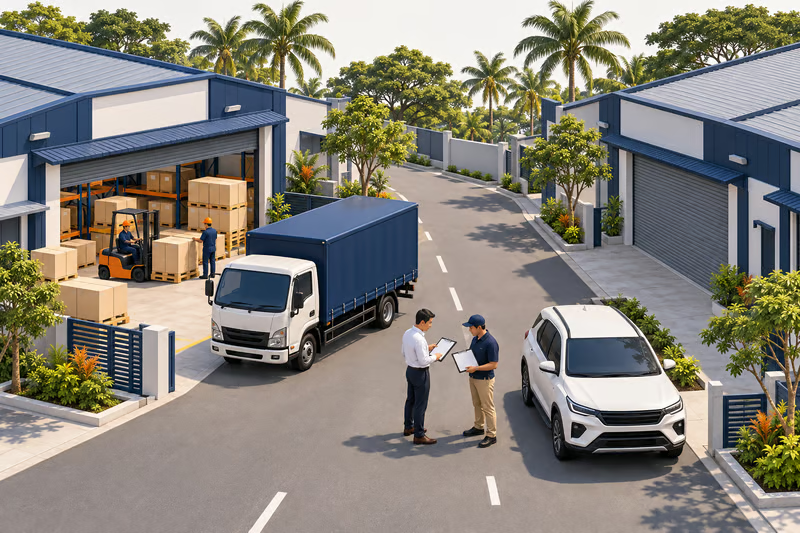
Banks lend against the title, so the remaining lease caps the loan in two ways:
- Loan tenure: the bank will not let the loan run past the lease expiry and normally wants a buffer of years left after the final instalment. Each bank sets its own minimum remaining lease, so ask for it in writing before you sign.
- Valuation: a panel valuer values a short lease lower than a long one, and the loan margin is applied to that valuation, not to your price. A low valuation means more cash down.
- Margin: banks publish one margin for industrial property whatever the tenure. OCBC, for example, states up to 85% of the property value or price for individuals and up to 140% for companies on its industrial and commercial property loan, subject to its own caps. Banks generally do not publish a minimum remaining lease for industrial property; it is a credit decision on each case.
Worked example: how the remaining lease limits the loan
| Lease and start year | Expiry | Years left in 2026 | Longest loan before expiry | What it means |
|---|---|---|---|---|
| 99 years from 1990 | 2089 | 63 | Not the limit | Borrower age and building decide the tenure |
| 99 years from 1975 | 2074 | 48 | Under 48 years, less any buffer the bank wants | Usually still financeable; valuation starts to soften |
| 60 years from 2000 | 2060 | 34 | Under 34 years, less the buffer | Shorter tenure, higher instalments |
| 60 years from 1985 | 2045 | 19 | Under 19 years, less the buffer | Few lenders; mostly cash buyers |
The expiry and years left are simple arithmetic; how long a buffer each bank wants is its own policy, so get it in writing.
Factory loans for companies are priced off the bank's Base Rate or BLR, with margins and tenures covered in our factory loan guide. Leasehold titles also need the State's consent to charge the land where the title carries a restriction in interest, which adds time before the loan can be drawn.
Restrictions in interest and consent to transfer
Section 120 of the Code requires any restriction in interest (sekatan kepentingan) to be endorsed on the title. The common industrial version says the land cannot be transferred, leased or charged without the State Authority's consent. It appears on many leasehold titles and on some freehold ones, so read the title, not the listing. A land search on e-Tanah shows the exact wording.
What consent means in practice:
- It adds a step and time. In Selangor, the State delegated many transfer-consent decisions to land administrators and the PTG Director, set a two-week target for decisions and gave the PTG Director power over blanket consent for industrial lots without quota (PTG Selangor circular 4/2008). Check current timings with the PTD.
- Auction purchases are different. Consent under the restriction is not required for a transfer after a chargee's public auction, under the proviso to section 301 (PTG Selangor circular 7/2006).
- Foreign buyers need State approval either way. Section 433B applies to non-citizens and foreign companies, and Selangor's minimum price for industrial property is RM3 million in all zones, as stated in a Selangor State Assembly answer. Tenure does not change that threshold.
Resale: why the remaining lease decides your exit
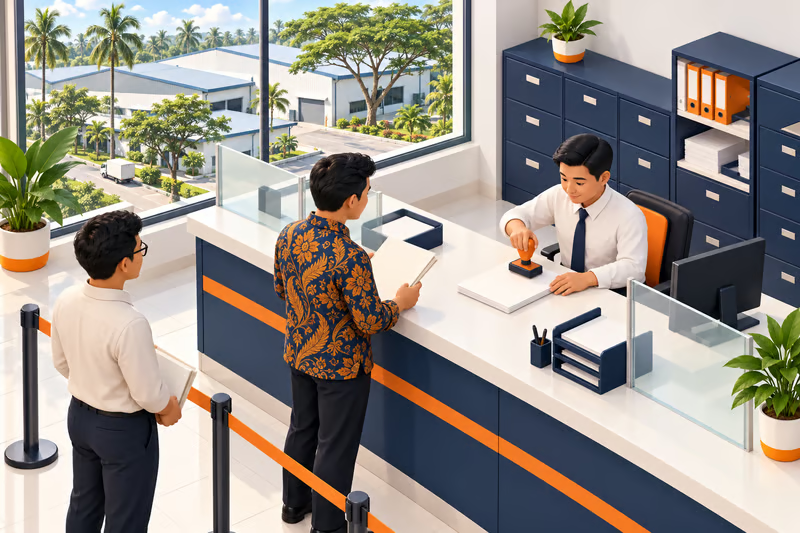
When you sell, your buyer's bank runs the same remaining-lease test that yours did. A factory with 70 years left sells much like freehold. One with 30 years left can only be bought by buyers with cash or a short loan, and they price in the renewal premium. That is why leasehold value tends to fall faster in the last few decades of the term.
Costs that do not depend on tenure: stamp duty on the transfer is the same whichever the tenure (the 1% to 4% scale for Malaysian buyers; non-citizens and foreign companies pay a flat 4% since 1 January 2024), legal fees follow the same scale, and RPGT applies the same way. What changes is the size of the buyer pool and the renewal liability the next owner inherits. Our step-by-step guide to buying a factory covers the full cost table.
Shah Alam and Klang: what the transaction data shows
The same JPPH-registered data shows how unevenly tenure is spread across the Klang corridor (factory transfers, 24 months to August 2026):
| Area | Freehold deals | Leasehold deals | What it means for a buyer |
|---|---|---|---|
| Shah Alam | 136 | 22 | Mostly freehold trades; leasehold is the exception |
| Bukit Raja | 55 | 2 | Almost all freehold |
| Meru | 45 | 0 | Freehold stock |
| Pandamaran | 44 | 11 | Mostly freehold, some leasehold |
| Kapar | 247 | 57 | Mostly freehold, with a clear price gap |
| Klang & Port Klang | 451 | 185 | Mixed; leasehold medians far lower |
| Pulau Indah, Westport & PIIP | 0 | 77 | Leasehold estates |
| Telok Gong | 0 | 8 | Leasehold estate |
If you want a port-side site on Pulau Indah or in Telok Gong, you are buying leasehold, so the remaining term and the renewal premium are part of the price. Inland in Kapar, Meru or Bukit Raja, freehold is common and the trade-off is distance to Westport and Northport. Our area guides go deeper: Kapar, Meru, Westport, Port Klang, Taman Klang Jaya and Pulau Indah. Outside Klang, see Sungai Buloh and Jenjarom.
Is freehold or leasehold better for a factory?
Neither is better in every case. Freehold is better when you plan to hold for decades, want the widest pool of buyers when you sell, or need the highest loan. A leasehold factory with a long remaining term can be the better buy when it is in the location you need (most port-side land is leasehold) and its price already reflects the years left.
Decision table: which tenure fits you?
| Your situation | Usually better | Why |
|---|---|---|
| Owner-occupier holding 20 years or more | Freehold, or leasehold with 70+ years left | No renewal bill during your hold |
| Need a port-side site (Pulau Indah, Telok Gong) | Leasehold with a long remaining term | Little or no freehold supply there |
| Buying with a high loan margin | Freehold or long lease | Remaining lease caps tenure and valuation |
| Investor buying for rental yield | Either, priced on remaining lease | Lower price can lift yield if the term outlasts your hold |
| Planning to sell within 10 years | Freehold or 60+ years left | Next buyer's bank applies the same test |
| Foreign-owned company | Either, at RM3 million or more in Selangor | State approval applies to both |
| Lease with under 30 years left | Only with cash and a priced-in premium | Financing and resale are both thin |
Checklist before you sign
- Title tenure and expiry date read from an official search, not the listing
- Remaining years at the end of your planned loan and holding period
- Restriction in interest wording and whether State consent is needed to transfer and charge
- Bank's minimum remaining lease confirmed in writing
- Renewal premium estimated with the PTD or a registered valuer
- Price compared with the same estate and similar remaining lease
Frequently Asked Questions
What is the difference between freehold and leasehold in Malaysia?
Freehold land is held in perpetuity, while leasehold land is held for a fixed term shown on the title, often 60 or 99 years for industrial land. At the end of a lease the land returns to the State unless the owner renews it and pays a premium. Both pay quit rent and both must follow the land category and conditions on the title.
What does freehold property mean in Malaysia?
A freehold property is land held in perpetuity, with no expiry date on the title. The owner still pays yearly quit rent and must follow the land category and conditions, and some freehold titles also carry a restriction in interest. Under section 76 of the National Land Code, new State land is normally granted on lease, so most freehold industrial titles come from older grants.
Is freehold or leasehold better for a factory?
Freehold is usually better for a long hold, a high loan and an easy resale, because there is no expiry and no renewal premium. A leasehold factory with 60 or more years left can be the better buy when it is in the location you need, such as port-side land at Pulau Indah, and the price already reflects the remaining term. Compare units in the same estate with similar years left.
What does leasehold mean on a Malaysian land title?
It means the title gives you the land for a set number of years, with the expiry date printed on it. You can sell, charge or lease the property during the term, subject to any restriction in interest. The value that matters is the remaining term, not the original 99 or 60 years.
What happens when a 99-year lease expires in Selangor?
The land reverts to the State. Owners avoid this by applying to the district land office before expiry; if the State approves, it issues a premium notice and endorses a new term once the premium is paid. Approval is not automatic, so start early.
How much does it cost to renew a leasehold factory in Selangor?
The State values the land and issues a premium notice; the building is not charged. Selangor's published scale for industrial land on lease is 3/4 of 1% of land value for each year of the term, so adding 59 years to one acre valued at RM3 million comes to about RM1.33 million before any rebate. Get the PTD's figure for your lot before you buy.
Can I get a bank loan for a leasehold factory with 30 years left?
It is difficult. Banks will not lend past the expiry date and want years left after the final instalment, so the possible tenure is short and the valuation is lower. Ask the bank for its minimum remaining lease in writing before you sign.
Is a leasehold factory always cheaper than freehold?
No. In JPPH-registered factory transfers in Selangor and Kuala Lumpur over the 24 months to August 2026, the median price was RM1.8 million for freehold and RM1.77 million for leasehold, because newer leasehold estates sell well and the mix of factory sizes differs. Within the same area freehold usually costs more, for example RM3 million against RM980,000 in Kapar, although in Shah Alam leasehold was higher.
Can leasehold be converted to freehold in Malaysia?
Not routinely. Selangor's published procedures cover renewing a lease or re-alienating the land for a new term, not conversion to freehold. Confirm any other option with the district land office.
Does the remaining lease affect the loan margin for a factory?
Not the published margin, which banks set for industrial property whatever the tenure. It affects the valuation the margin is applied to and the longest tenure the bank allows, because no bank lends past the expiry date. A factory with a short lease therefore gets a smaller, shorter loan.
Can a foreign company buy a leasehold factory in Selangor?
Yes, with State approval under section 433B and at or above Selangor's RM3 million minimum price for industrial property. The threshold is the same for freehold and leasehold, and the State's approval is needed before the transfer can be registered.
What are the disadvantages of owning a leasehold property in Malaysia?
The main disadvantages of owning a leasehold property in Malaysia are that the land reverts to the State when the term ends unless it is renewed, and renewal is not automatic and requires an application to the land office plus a premium. The remaining lease also caps your bank loan because a bank will not lend past the expiry date, and the next buyer's bank applies the same test, so a short lease narrows your exit and resale pool.
What happens after 99 years of leasehold in Malaysia?
When a 99-year leasehold term ends, the land reverts to the State unless it is renewed. Renewal is not automatic: the owner applies to the district land office, the land is valued, and if the State approves, a premium notice is issued that must be paid before the new term is endorsed. The premium is charged on the land value, not the building.

Buying or renting, talk to us
Contact Adam or Yuki to discuss your requirements. Confirm the available service, scope and terms directly before proceeding.
| Agent | Mobile / WhatsApp | |
|---|---|---|
| Adam | 60176729873 | +60 17-672 9873 |
| Yuki | 60167724476 | +60 16-772 4476 |
Factories and Warehouses in Port Klang
Archived catalogue records with power, ceiling height and floor loading for every unit: