How to Buy a Factory in Malaysia Step by Step: Deposit, Full Costs and Licences (2026)
How to buy a factory in Malaysia step by step, from spec and loan check to SPA, completion and the council licence. Includes the 10% deposit, a cost table at RM1 million, RM2 million and RM5 million, the hidden costs and a due-diligence checklist covering land category, CCC, KTK risk and power.
Key Takeaways
How to buy a factory in Malaysia step by step: set your spec (power, floor loading, height), get a bank pre-assessment, shortlist units, check the title, CCC and power, sign an offer with a 2% to 3% earnest deposit, sign the SPA and top up to 10%, secure the loan, then complete the transfer three months after the SPA.
- Buying a factory in Malaysia takes 9 steps and usually about 3 to 5 months from offer to keys on a clean sub-sale: spec, budget, area, shortlist, due diligence, offer, SPA, loan and completion.
- The deposit is normally 10% of the price: about 2% to 3% as earnest money with the offer, and the balance up to 10% when you sign the SPA.
- Banks lend individuals up to about 85% and companies more (one bank advertises up to 140% for companies, including working capital), so cash needed is roughly 15% to 30% of the price once costs are added.
- For a Malaysian citizen or PR, on a RM2 million factory, transfer stamp duty is RM64,000 and loan stamp duty is 0.5% of the loan. A foreign buyer pays a flat 4% instead, or RM80,000 on the same price. SPA legal fees under SRO 2023 come to RM21,250, plus 8% service tax.
- Check five things before you pay anything: land category and express condition, CCC or CF, planning permission (KTK risk in Selangor), power supply and encumbrances on the title.
To buy a factory in Malaysia, fix your operating spec first, confirm how much the bank will lend, then shortlist units and run due diligence on the title, CCC and power before you make an offer. You pay about 2% to 3% as earnest deposit with the offer, top up to 10% when the Sale and Purchase Agreement (SPA) is signed, and pay the balance (usually your bank loan) on completion, which is commonly 3 months after the SPA. Budget another 5% or so of the price for stamp duty and legal fees.
This guide covers sub-sale (secondary market) factories, warehouses and industrial land in the Klang Valley, which is how most owner-occupiers buy. Developer projects follow a progress-payment schedule instead.
The 9-Step Process to Buy a Factory in Malaysia
| Step | What you do | Typical timing | Money out |
|---|---|---|---|
| 1. Define the spec | Power (amps), floor loading, clear height, yard, built-up and land size, permitted use | 1 to 2 weeks | Nil |
| 2. Budget and loan check | Bank pre-assessment of margin and repayment | 1 to 3 weeks | Nil |
| 3. Choose type and area | Terrace, semi-D, detached, warehouse or land; port belt vs inland | Parallel to step 2 | Nil |
| 4. Shortlist and view | Visit, compare specs and asking prices against recorded deals | 2 to 8 weeks | Nil |
| 5. Due diligence | Title search, land category, CCC/CF, planning permission, TNB supply, arrears | 1 to 2 weeks | Search fees |
| 6. Offer and earnest deposit | Signed offer letter, deposit held by agent or lawyer as stakeholder | Day 0 | About 2% to 3% |
| 7. Sign the SPA | Balance deposit; SPA and transfer prepared by lawyers | 14 to 21 days after offer (common practice) | Up to 10% in total |
| 8. Loan, valuation and consents | Letter of offer, valuation, loan agreement, any state consent | Within the completion period | Loan legal fees and stamp duty |
| 9. Completion and handover | Balance paid, transfer stamped and registered, keys handed over | Commonly 3 months from SPA, plus an extension at late interest if agreed | Balance of price |
The timings are typical for a clean sub-sale with an individual or strata title. Leasehold land that needs state consent to transfer, or a foreign buyer who needs approval, can add months, so ask your lawyer when the completion period starts counting.
Step 1: Define your operational spec
Most failed factory purchases start with a buyer who looked at size and price only. Write down the numbers that decide whether the building works:
- Power supply. Total connected load of your machines in amps at 415V three-phase. Ask for the TNB bill and the switchboard rating. If you need much more than the unit has, a TNB upgrade or a new substation can take time and money. Size your load with our factory power calculator.
- Floor loading. Ask for the structural drawings that show the design load. Presses, racking and heavy stock need a slab designed for them.
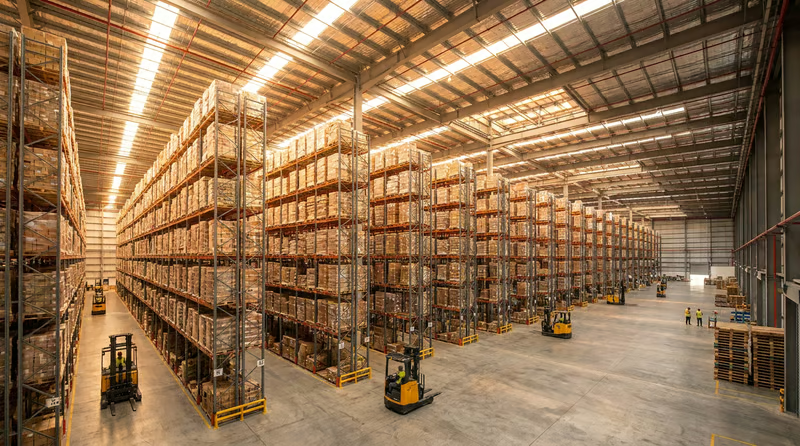
- Clear height. Measure to the underside of the lowest beam, not the roof ridge. Racking and overhead cranes depend on it.
- Yard and access. Can a 40-foot trailer enter, turn and load? Count loading bays.
- Permitted use. Your activity must fit the land use in the local plan and the use approved for the building. Food, chemicals, metal finishing and anything with scheduled waste also need Department of Environment (DOE) approvals, so check with DOE before you commit.
Step 2: Set the budget and check financing
Get a bank's view before you shortlist. For a commercial property loan, OCBC states individuals can borrow up to 85% of the value or price, and companies up to 140% (the extra covers working capital), within its caps. Other banks set their own limits, and the bank lends on its valuer's figure, not your price. If the valuation comes in below the price, you fund the gap in cash. Compare rates and run repayments with our mortgage calculator for factories, and read our industrial property loan guide for margins and tenure.
Step 3: Choose the product type and area
See the type and area sections below. Fit for your operation comes first, price second.
Step 4: Shortlist and benchmark the price
Compare asking prices against what actually changed hands. In JPPH-registered transactions across Selangor and Kuala Lumpur over the 24 months to August 2026, terrace factories had a median price of RM1.17 million (RM518 psf of land) and semi-detached factories RM4.9 million (RM375 psf of land) (Selangor & Kuala Lumpur transaction prices and rents). A unit priced far above its area's recorded deals needs a reason: better power, a bigger yard or a newer building.
Step 5: Run due diligence before you pay
Use the checklist further down. Do this before the earnest deposit if you can, because getting money back after an offer is signed depends on the offer letter's terms.
Step 6: Make the offer and pay the earnest deposit
The offer letter states the price, deposit, completion period, what stays in the building (cranes, transformers, racking) and any conditions, such as loan approval or a clean CCC check. The earnest deposit is commonly 2% to 3%.
Step 7: Sign the SPA
You pay the balance deposit so the total reaches 10%. Your lawyer checks the title, prepares or reviews the SPA and the Memorandum of Transfer (Form 14A), and handles stamping. The SPA itself carries only a nominal fixed duty. The ad valorem duty is paid on the transfer.
Step 8: Loan, valuation and consents
The bank issues a letter of offer after its valuation. Your lawyer (or the bank's panel lawyer) prepares the loan agreement and charge. If the title has a restriction in interest, or you are a foreign buyer, the state's consent is needed before the transfer can be registered.
Step 9: Completion and handover
The bank releases the loan, the seller's lawyer redeems any existing charge, the transfer is presented for registration at the land office, and you take vacant possession. Do a final walkthrough: meters read, outstanding quit rent and assessment apportioned, fixtures in the SPA still in place.
How Much Deposit Do You Need to Buy a Factory?
The deposit is 10% of the price, paid in two parts (offer and SPA). But the cash you need is larger, because the loan rarely covers 90% for a company or a first-time buyer and the costs come on top.
Cost table: buying a RM2 million factory
| Item | Basis | 80% loan | 90% loan |
|---|---|---|---|
| Deposit at offer and SPA | 10% of price | RM200,000 | RM200,000 |
| Balance not covered by loan | Price minus deposit minus loan | RM200,000 | Nil |
| Stamp duty on transfer (MOT) | 1% / 2% / 3% / 4% tiers (Malaysian citizens/PRs) | RM64,000 | RM64,000 |
| SPA legal fees | SRO 2023 scale | RM21,250 | RM21,250 |
| Service tax on SPA legal fees | 8% | RM1,700 | RM1,700 |
| Loan stamp duty | 0.5% of loan | RM8,000 | RM9,000 |
| Loan legal fees | SRO 2023 scale | RM17,250 | RM19,250 |
| Service tax on loan legal fees | 8% | RM1,380 | RM1,540 |
| Valuation fee, searches, disbursements | Valuer's scale and actual costs | Get quotes | Get quotes |
| Cash needed (before valuation and disbursements) | about RM513,580 (26%) | about RM316,740 (16%) |
The table assumes a Malaysian citizen or PR buyer. A foreign buyer pays a flat 4% transfer duty, RM80,000 on RM2 million, which adds RM16,000 to the cash needed.
How the figures are worked out:
- Transfer stamp duty follows the Stamp Act tiers: 1% on the first RM100,000, 2% on the next RM400,000, 3% on the next RM500,000 and 4% above RM1 million, the top band having been raised in Budget 2019 (Ministry of Finance). On RM2 million: RM1,000 + RM8,000 + RM15,000 + RM40,000 = RM64,000. Malaysian citizens and Malaysian permanent residents pay those tiers. A foreign company, or an individual who is neither a Malaysian citizen nor a Malaysian permanent resident, pays a flat 4% on industrial and commercial property, so RM2 million is RM80,000. For residential property, that foreign rate rose from 4% to 8% from 1 January 2026. If a Malaysian-incorporated company has foreign shareholders, ask your conveyancing lawyer to confirm whether the flat 4% applies to your company. Our stamp duty guide for factory buyers covers the move to self-assessment.
- Legal fees follow the Solicitors' Remuneration Order 2023, in force since 15 July 2023: 1.25% on the first RM500,000 (minimum RM500), 1% on the next RM7 million, and a negotiable rate of no more than 1% above RM7.5 million. Lawyers may discount the scale by up to 25% (Malay Mail). Professional services carry 8% service tax (Royal Malaysian Customs SST portal). The full breakdown is in our guide to SPA legal fees and stamp duty for factories.
- Loan stamp duty is 0.5% of the loan amount (Hong Leong Bank).
- Valuation fees follow the valuers' scale fee and some banks absorb or refund them, so ask the bank.
- Self-assessment from 2027. From 1 January 2027, transfers of real property that do not involve a JPPH valuation move into phase 2 of LHDN's Stamp Duty Self-Assessment System (STSDS): the duty payer or the appointed agent, usually your lawyer, uploads the transfer on MyTax, assesses the duty and pays it within the set period, and keeps the records for 7 years (LHDN). Self-assessment changes how the duty is assessed and paid, not the rates above, and it was cited in Budget 2027 as a driver of higher stamp duty collection (The Star).
How much does it cost to buy a factory at RM1 million, RM2 million and RM5 million?
The same rules give these totals for a Malaysian citizen or PR buyer with an 80% loan. Legal fees are shown at the full SRO 2023 scale, before any discount.
| Item | RM1 million | RM2 million | RM5 million |
|---|---|---|---|
| Transfer stamp duty (tiered rates) | RM24,000 | RM64,000 | RM184,000 |
| SPA legal fee (SRO 2023 scale) | RM11,250 | RM21,250 | RM51,250 |
| Service tax 8% on SPA fee | RM900 | RM1,700 | RM4,100 |
| Loan amount at 80% | RM800,000 | RM1,600,000 | RM4,000,000 |
| Loan stamp duty (0.5%) | RM4,000 | RM8,000 | RM20,000 |
| Loan legal fee (SRO 2023 scale) | RM9,250 | RM17,250 | RM41,250 |
| Service tax 8% on loan fee | RM740 | RM1,380 | RM3,300 |
| Costs on top of the price | RM50,140 (5.0%) | RM113,580 (5.7%) | RM303,900 (6.1%) |
| 20% not financed (deposit plus balance) | RM200,000 | RM400,000 | RM1,000,000 |
| Cash needed before valuation and disbursements | RM250,140 | RM513,580 | RM1,303,900 |
| Foreign buyer: flat 4% transfer duty instead | RM40,000 | RM80,000 | RM200,000 |
Two things stand out. Costs rise from about 5% to about 6% of the price as the price grows, because more of it falls in the 4% stamp duty band. And at any price of RM1 million or more, the flat 4% costs a foreign buyer exactly RM16,000 more than the tiered rates, although in Selangor a foreign buyer can only buy industrial property priced at RM3 million or more (see Foreign Buyers below).
Run your own numbers in the legal fees and stamp duty calculator. Treat all figures as estimates and confirm final amounts with your lawyer and bank. This guide is general information, not legal or tax advice.
Hidden Costs of Buying a Factory: What the Cost Table Leaves Out
Stamp duty and legal fees are only the costs you can calculate in advance. These others depend on the building and your operation, so get a quote for each before you sign the offer:
| Cost | Who you pay | When it comes up |
|---|---|---|
| Valuation fee | The bank's panel valuer (some banks absorb or refund it) | Before the bank's letter of offer |
| Searches and disbursements | Your lawyer, at actual cost | At the SPA and loan stages |
| Apportioned quit rent and assessment, plus any arrears | Land office and local council | At completion |
| Fire insurance | Your insurer; a bank financing the purchase normally requires it | From completion |
| Utility account transfer and deposits | TNB and the state water operator | Before production starts |
| Power upgrade or a new substation | TNB and your electrical contractor | When your load exceeds the existing supply |
| Renovation, fit-out and approved plans for any alteration | Your contractor, plus plan approval from the local council | Before you move in |
| Council industrial licence | The local council (MBDK in Klang) | Before you operate |
| DOE and Bomba approvals for your process | Department of Environment, Bomba | Before you operate |
| Agent fee | Only if you appointed your own agent; the rate is set in your written appointment | At completion |
The power line is the one that most often breaks a budget. If the unit's supply is far below your load, ask TNB what an upgrade involves before you commit, and size the load first with the factory power calculator.

What Licences Do You Need After Buying a Factory?
Owning the building does not give you the right to operate in it. The local council licenses the activity. In Klang, MBDK's licensing department processes industrial licences in several categories, including a risk-category industrial licence (listed at 30 days), a temporary industrial licence (14 days) and a licence under the KTK regularisation programme, and its enforcement unit inspects industrial premises for compliance with licence conditions. Other councils, such as MBSA in Shah Alam, run their own licensing. Our MBDK factory licence guide covers the MyLesen steps, the agency letters and late renewal fees.
Plan the licence before completion, not after:
- Check that the approved use of the building and the express condition on the title match your activity.
- Collect the CCC or CF, approved building plans and any Bomba fire certificate from the seller at completion.
- Ask the council which agency letters your activity needs (DOE for scheduled waste or emissions, Bomba for fire safety).
- Transfer the TNB and water accounts into your company's name, so the licence application shows the right occupier.
- Apply, and do not start production until the licence or a temporary licence is issued.
Due Diligence Checklist Before You Buy a Factory
| Check | What to ask for | Red flag |
|---|---|---|
| Title and owner | Official land search | Owner on title differs from seller; private caveat; prohibitory order |
| Land category | Category of land use on the title | "Pertanian" (agriculture) or "Bangunan" with a factory on it |
| Express condition | Condition on the title, e.g. industrial use | Condition does not allow your activity |
| Restriction in interest | Endorsement on the title | Transfer needs state consent; Bumiputera or Malay Reserve restriction |
| Tenure | Freehold, or leasehold expiry date | Short remaining lease limits loan tenure and resale |
| CCC or CF | Copy of CCC (Form F) or old CF, approved building plans | No CCC/CF; extensions not on approved plans |
| Planning permission | Kebenaran Merancang reference | None, which in Selangor points to a KTK case |
| Power | TNB bill, switchboard rating, substation details | Supply far below your load |
| Fire safety | Bomba fire certificate where the premises need one | Lapsed or never issued |
| Environment | DOE approvals for your process | Process needs approvals the site cannot get |
| Arrears | Quit rent, assessment, water, electricity receipts | Unpaid bills, which buyers often inherit in practice |
| Occupation | Existing tenancy | Sitting tenant with a long lease you did not plan for |
| Site | Flood history, drainage, road access for trailers | Floods, narrow access |
Land category, express condition and the KTK risk
The title tells you what the land may be used for. A factory on land still categorised as agriculture, or built without planning permission, is an unauthorised factory (kilang tanpa kebenaran, KTK). Selangor runs a programme to 31 December 2027 to regularise or relocate these, and owners who receive a Notice 7A have 12 months to apply (DUN Selangor). The risk passes with the land, so read our Selangor KTK programme guide before buying any factory with an agricultural title or no approved plans.
CCC or CF
Since 12 April 2007 (The Sun, via HBA), a Certificate of Completion and Compliance (CCC) has been issued by the architect or engineer who submitted the building plans, not by the council (Board of Architects Malaysia). Older buildings have a Certificate of Fitness for Occupation (CF) from the council. Without one, banks hesitate, and occupying a building that needs a CCC but has none is an offence under section 70(27) of the Street, Drainage and Building Act 1974. See what a CCC is and how to verify it.
The Five Types of Industrial Property, and What They Cost
| Type | Median price | Middle half of deals | Median land | Best for |
|---|---|---|---|---|
| Terrace or link factory | RM1.17 million | RM630,000 to RM1.7 million | 2,002 sq ft (RM518 psf of land) | Light assembly, workshops, e-commerce |
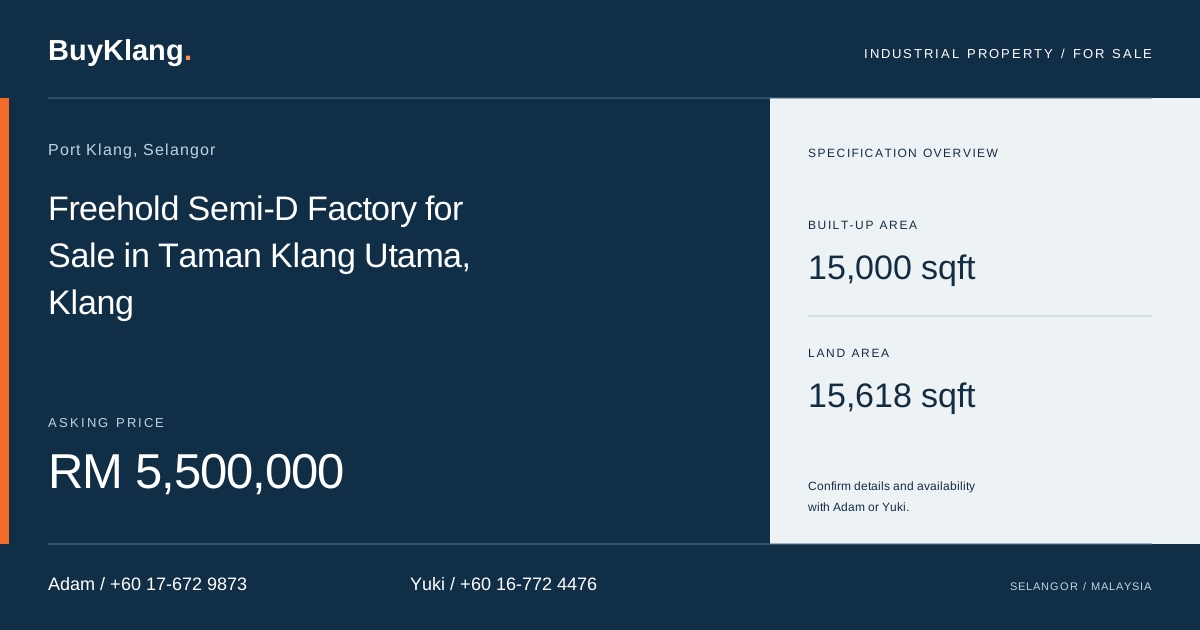
| Semi-D factory | RM4.9 million | RM3.6 million to RM6.65 million | 12,350 sq ft (RM375 psf of land) | Growing manufacturers that need a yard |
| Detached factory | RM10 million | RM6.35 million to RM16.5 million | 38,865 sq ft (RM281 psf of land) | Heavy industry, food, 24-hour operations |
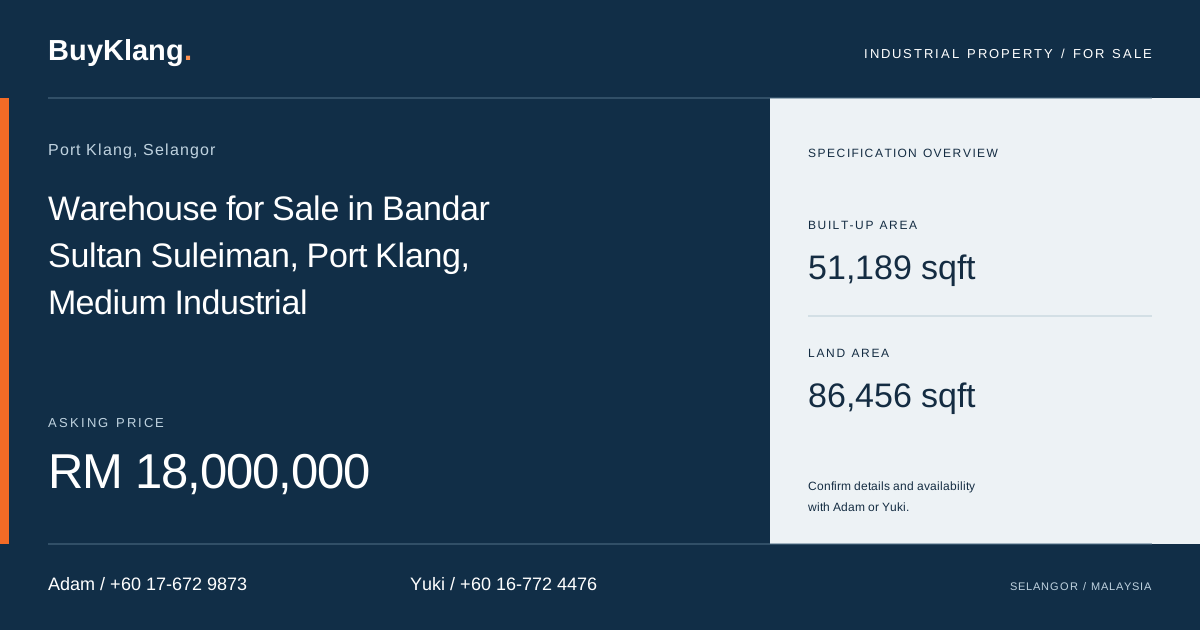
| Warehouse | RM8.7 million | RM4.5 million to RM17.66 million | 65,208 sq ft (RM170 psf of land) | Storage and distribution (few recorded deals) |
| Industrial land | RM4.6 million | RM1.92 million to RM9.13 million | Median RM69 psf of land | Build-to-suit, land banking |
Source: JPPH-registered transactions in Selangor and Kuala Lumpur, 24 months to August 2026. Every psf figure is per sq ft of land, not built-up area. Freehold factories had a median price of RM1.8 million against RM1.77 million for leasehold, a gap that mixes location, size and type, not tenure alone.
Which type fits your industry:
- Light assembly, electronics, packaging, printing: terrace or semi-D with clean three-phase power.
- Food and beverage: semi-D or detached with water, effluent approval and room for cold rooms.
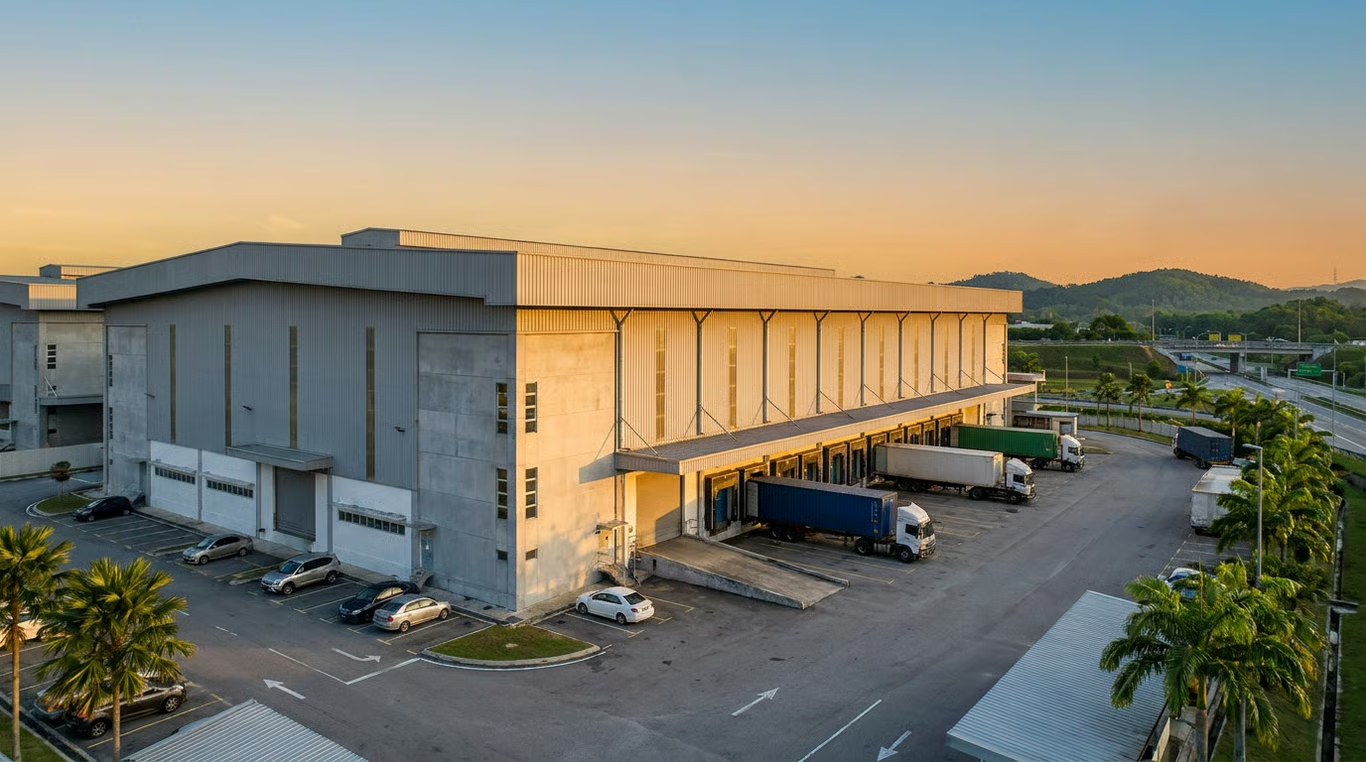
- Logistics and distribution: warehouse or detached with a deep yard and several loading bays.
- Heavy manufacturing, metalwork, plastics: detached factory or land with high amperage and heavy floor loading.
- Data and high-tech operations: land or a detached plant with dual power feeds and space for generators.
Where to Buy a Factory in the Klang Valley
Location is a freight and workforce decision before it is a price decision.
- Port Klang belt (Westport, Pulau Indah, Telok Gong, Northport, Pandamaran, Kapar, Bukit Raja): container logistics and export manufacturing. Browse factories for sale in Port Klang.
- Shah Alam and central Selangor: established estates, good roads and a large skilled workforce, at the top of the price range. See factories for sale in Shah Alam.
- Northern corridor (Sungai Buloh, Rawang, Serendah): newer stock and more land, linked by LATAR and the Guthrie Corridor.
- Southern corridor (Sepang, Dengkil, Banting, Nilai): growth around KLIA, with ELITE and the North-South Expressway.
- Eastern corridor (Balakong, Kajang, Semenyih): city-serving industries, building materials and food distribution.
Hidden costs to test at each site: haulage distance to the port, labour catchment and worker housing, power headroom, effluent approval and flood history.

Foreign Buyers
Foreign buyers can buy industrial property with the state's consent. In Selangor the minimum price for a foreign purchase of industrial property is RM3 million in Zones 1, 2 and 3, and agricultural land, Malay Reserve land and property bought at public auction are closed to foreign buyers (DUN Selangor). Zone 1 covers Petaling, Gombak, Hulu Langat, Sepang and Klang. In July 2025 the state confirmed these limits still rest on the Selangor Land and Mines Director's Circular No. 1/2014, in force since 1 September 2014, and said it is preparing new guidelines (DUN Selangor, 2025). Confirm the current rules with PTG Selangor and your lawyer before you sign, and read our guide for foreign companies buying a factory.
On stamp duty, a foreign company or an individual who is neither a Malaysian citizen nor a permanent resident pays a flat 4% on a factory. The 8% rate that applies from 1 January 2026 covers residential property only (The Star).
Whatever the price, start with the title: our land search guide (carian rasmi on e-Tanah Selangor) shows how to check the land category, express conditions and encumbrances before you pay a deposit.
Buying a cluster or stratified factory? Read our strata title vs individual title guide for factories first: master title, loans, renovation approvals and resale differ.
For the full budget beyond rent or price, see our cost to set up a factory in Malaysia guide: move-in, fit-out, power upgrade, approvals and running costs.
Frequently Asked Questions
How do I buy a factory in Malaysia step by step?
Set your spec, get a bank pre-assessment, shortlist units and run due diligence on the title, CCC and power supply. Then sign an offer with a 2% to 3% earnest deposit, sign the SPA within about 14 to 21 days and top up to 10%. Completion usually follows about three months later, when the loan is released and the transfer is registered at the land office.
What are the hidden costs of buying a factory?
Beyond stamp duty and legal fees, budget for the valuation fee, searches and disbursements, apportioned quit rent and assessment, fire insurance, utility deposits, any TNB power upgrade, renovation with approved plans and the council licence you need before you operate. None of these appear in the price, so get quotes before you sign the offer. On fire cover, insure the building at rebuilding cost and add machinery, stock and flood where needed; our factory fire insurance guide explains how.
How much cash do I need to buy a RM1 million factory?
With an 80% loan, a Malaysian buyer needs about RM250,140 before valuation and disbursements: RM200,000 for the 20% not financed and about RM50,140 for stamp duty, legal fees and service tax. A foreign buyer pays RM16,000 more in transfer duty, but in Selangor foreigners can only buy industrial property priced at RM3 million or more.
Do I need a licence to run a factory after buying it?
Yes. The local council licenses the activity, and owning the building does not replace that licence. In Klang, MBDK processes industrial licences, including a temporary industrial licence and a licence under the KTK programme. Your process may also need DOE and Bomba approvals before you start production.
How much deposit do I need to buy a factory in Malaysia?
The deposit is 10% of the price: about 2% to 3% with the offer letter and the balance when you sign the SPA. On top of that you fund any part of the price the loan does not cover, plus stamp duty and legal fees. For a RM2 million factory that is about RM317,000 with a 90% loan and about RM514,000 with an 80% loan.
How long does it take to buy a factory?
A clean sub-sale usually takes about 3 to 5 months from offer to keys. The SPA is commonly signed 14 to 21 days after the offer, and completion is commonly 3 months after the SPA, with an extension at late interest if agreed. State consent for leasehold land or foreign buyers adds time.
How is stamp duty calculated on a factory purchase?
For a Malaysian citizen or Malaysian permanent resident, the transfer is stamped at 1% on the first RM100,000, 2% on the next RM400,000, 3% on the next RM500,000 and 4% above RM1 million. A RM2 million factory pays RM64,000. A foreign company, or an individual who is neither a Malaysian citizen nor a Malaysian permanent resident, pays a flat 4% on a factory: RM80,000 on RM2 million. The loan agreement is stamped separately at 0.5% of the loan.
What are the legal fees for buying a factory?
Under the Solicitors' Remuneration Order 2023, SPA fees are 1.25% on the first RM500,000 and 1% on the next RM7 million, plus 8% service tax and disbursements. The loan agreement is charged on the same scale. Lawyers may discount up to 25% of the scale fee.
Can I get a loan for a factory without a CCC?
It is difficult. Banks and their valuers normally ask for the CCC or CF of a completed building, and without it you may get a lower valuation, a smaller loan or a rejection. Ask the bank before you sign anything.
What should I check on the land title before buying a factory?
Check the owner, category of land use, express condition, restriction in interest, tenure and any caveats or charges through an official land search. A factory on land categorised as agriculture is a red flag for a KTK case in Selangor.
Is freehold or leasehold better for a factory?
Freehold is simpler to finance and resell. Leasehold can be cheaper, but banks may cap the loan tenure by the remaining lease, and some titles need state consent to transfer. Check the expiry date and the consent requirement before you offer.
Can foreigners buy a factory in Malaysia?
Yes, foreigners can buy a factory in Malaysia, but a foreign buyer pays a flat 4% transfer stamp duty instead of the tiered rates for Malaysian citizens and PRs, which is RM80,000 on a RM2 million factory. A foreign buyer also needs the state's consent before the transfer can be registered, and that approval can add months to completion. In Selangor, the industrial property must be priced at RM3 million or more.
Buying or renting, talk to us
Send us the numbers that decide the shortlist: required amps, built-up area, floor loading, preferred area and target date. We reply with what actually exists, including units that are not advertised publicly. For 800A to 4,000A+ requirements, see high-power factories in Selangor.
| Agent | Licence | Mobile / WhatsApp | |
|---|---|---|---|
| Adam | 60176729873 | +60 17-672 9873 | |
| Yuki | 60167724476 | +60 16-772 4476 |
Our aim is simple: every factory buyer should see the real numbers, the title and the power supply before signing anything. For a second opinion on a unit you are looking at, WhatsApp Adam at +60 17-672 9873 or Yuki at +60 16-772 4476.
Factories and Warehouses in Port Klang
Live listings with power, ceiling height and floor loading for every unit: