Factories and Machinery Act 1967 (FMA 1967): Repeal, CF Rules and Buyer and Tenant Checks
The Factories and Machinery Act 1967 was repealed on 1 June 2024 and its machinery rules moved into OSHA 1994. Here is what replaced FMA certificates of fitness, who renews them, and what factory buyers and tenants should check and write into the SPA or tenancy agreement.
Key Takeaways
- The Factories and Machinery Act 1967 (FMA 1967, Act 139) is no longer in force. It was repealed by the Factories and Machinery (Repeal) Act 2022 (Act 835) with effect from 1 June 2024, the same day the Occupational Safety and Health (Amendment) Act 2022 (Act A1648) moved machinery rules into OSHA 1994.
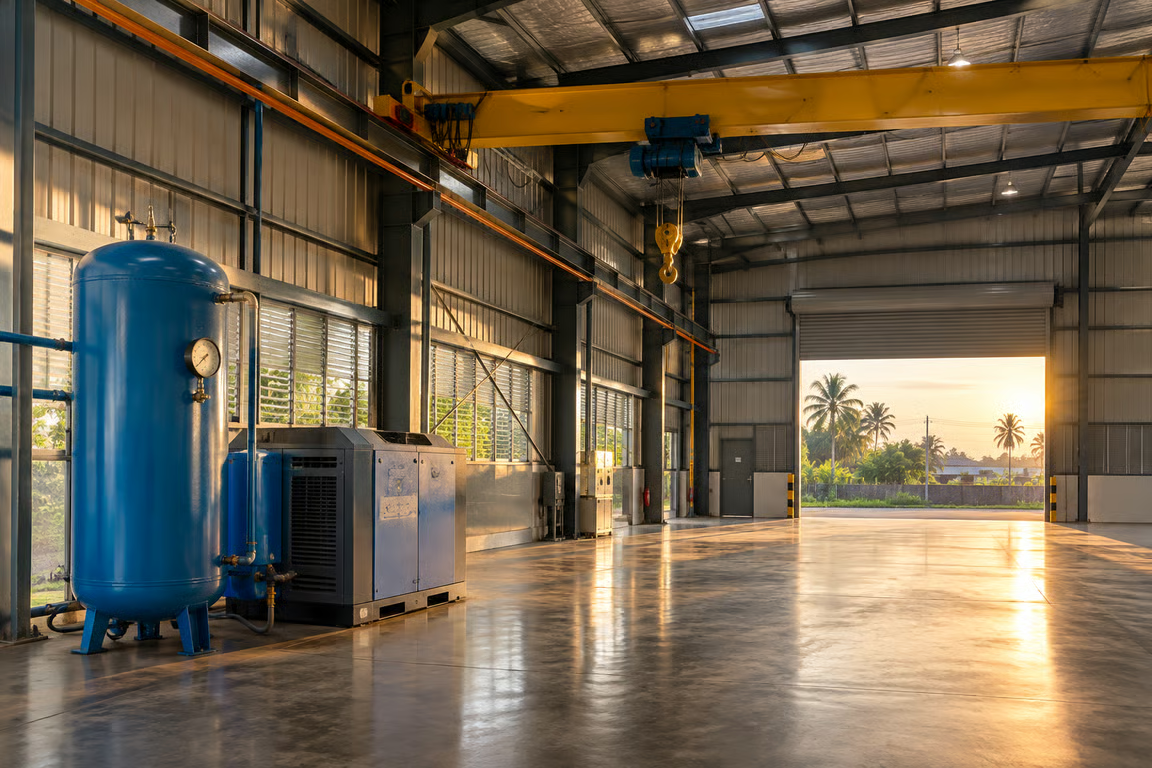
- Three types of plant still need a certificate of fitness (CF): steam boilers, pressure vessels (such as air receivers) and power-driven lifting machinery (lifts, overhead cranes, hoists), under P.U.(A) 99/2024.
- A CF is now valid for 15 months from the inspection date. FMA certificates issued on or before 31 May 2024 stayed valid until they expired, and FMA registrations carried over into OSHA 1994.
- Operating plant without a CF can cost a fine of up to RM100,000, up to 1 year in jail, or both. Ignoring a DOSH prohibition notice raises this to RM500,000 or 2 years.
- The DOSH factory permission and periodic factory inspection have ended for applications after 31 May 2024, but every boiler, pressure vessel and crane still needs its own CF.
- Before you buy or rent, get a plant list with registration numbers and CF expiry dates, and write into the SPA or tenancy agreement who renews each CF and who pays for repairs.
The Factories and Machinery Act 1967 was repealed on 1 June 2024. Its machinery rules now sit in the Occupational Safety and Health Act 1994 (OSHA 1994, Act 514), as amended by Act A1648, and in the Occupational Safety and Health (Plant Requiring Certificate of Fitness) Regulations 2024. Steam boilers, pressure vessels and power-driven lifting machinery still need a certificate of fitness from DOSH (JKKP) or a licensed person, renewed every 15 months.
For a factory buyer or tenant, the practical rule is unchanged: the lift, crane, boiler and air receiver that come with the building must each hold a valid CF before anyone operates them. What changed is the legal basis, some of the names, who may inspect, and the penalties: the general OSHA fine rose from RM50,000 to RM500,000.
Is the Factories and Machinery Act 1967 still in force?
No. Section 3 of Act 835 states that "the Factories and Machinery Act 1967 is repealed". The repeal received Royal Assent on 4 March 2022 but took effect only on the date the Minister of Human Resources fixed, 1 June 2024, as Malay Mail reported on 4 April 2024.
| Date | What happened |
|---|---|
| 4 March 2022 | Royal Assent for Act 835 (gazetted 16 March 2022) |
| 2 April 2024 | P.U.(B) 128/2024 fixes 1 June 2024 for OSHA amendment Act A1648; CF regulations P.U.(A) 99/2024 and Licensed Person Order P.U.(A) 100/2024 gazetted |
| 31 May 2024 | Last day of the FMA regime |
| 1 June 2024 | FMA repealed; machinery rules apply under OSHA 1994 |
| 31 August 2024 | Cut-off for FMA inspections booked before 1 June 2024 |
| 20 January 2025 | Special Scheme of Inspection Regulations 2025, P.U.(A) 25/2025, gazetted |
The amended OSHA 1994 applies to all places of work in Malaysia, including the public service (section 1(2) of the Act 514 text as at 1 June 2024). A new Part VIA, sections 27A to 27F, holds the plant rules that used to sit in the FMA.
Old FMA terms and their current OSHA 1994 equivalents
Sellers, landlords and contractors still use FMA wording, so here is how the terms map.
| Under FMA 1967 (to 31 May 2024) | Under OSHA 1994 (from 1 June 2024) |
|---|---|
| Certificate of fitness (Perakuan Kelayakan) under the 1970 regulations | Certificate of fitness under s.27D and P.U.(A) 99/2024, valid 15 months |
| Certificated machinery (jentera berperakuan) | Plant requiring certificate of fitness (loji yang menghendaki perakuan kelayakan) |
| Unfired pressure vessel | Pressure vessel: any closed vessel above or below atmospheric pressure |
| Written approval to install machinery (s.36) | Design verification plus installation approval (s.27C) |
| Permission to use premises as a factory (s.34), periodic factory inspection | No longer applied for after 31 May 2024 |
| Periodical inspection (s.40) | Periodical inspection (s.27E) |
| Certificate of competency (crane operator, boiler engineer) | Competent person registration under Act 514, via MyKKP |
| Inspection by DOSH officers only | DOSH officer or licensed person (s.7A, P.U.(A) 100/2024) |
Which plant needs a certificate of fitness now?
Regulation 3 of the Plant Requiring Certificate of Fitness Regulations 2024 lists three classes: steam boilers, pressure vessels and lifting machinery.
Passenger lifts, goods lifts and hoists
A "lift" carries people, or people and goods; a goods-only hoist fixed to the building is a "material hoist". Both need a CF. Lift owners must also keep a maintenance agreement of at least one year with a competent person and have lifts examined at least every three months.
Overhead cranes, gantry cranes and hoists
DOSH states that all power-driven lifting machinery, whether electric, diesel or pneumatic, needs design verification and a valid CF before construction, installation or use. The foundation or supporting structure must be designed for the load (regulation 4(1)(h)), so runway beams and slabs matter. Our factory specs guide explains crane tonnage and clearance, and the floor loading calculator helps check the slab.
Steam boilers
A steam boiler needs a CF and must be controlled by a registered steam boiler engineer and run by a registered operator (regulation 12). Electric steam boilers and autoclaves are excluded from the staffing rule, not from the CF.
Pressure vessels: air receivers and compressor tanks
The FMA's "unfired pressure vessel" is now simply a "pressure vessel", meaning any closed vessel above or below atmospheric pressure. A stand-alone air receiver therefore needs a CF unless it fits a Second Schedule exemption, such as a design pressure of 15 psig or less. One exemption covers vessels that are components of a rotating or reciprocating machine, so ask JKKP or the inspecting body whether a tank built into a compressor package qualifies.
What is exempt
| Plant | CF needed? |
|---|---|
| Passenger lift, goods hoist | Yes |
| Overhead travelling crane, gantry crane, electric hoist | Yes |
| Steam boiler | Yes |
| Air receiver or process vessel above 15 psig | Yes, unless in the Second Schedule |
| Forklifts and other material handling equipment | No (Third Schedule) |
| Dock levellers, vehicle tail-lifts, automated storage and retrieval systems | No (Third Schedule) |
| Cranes lifting up to 9 m and 80 kg; pneumatic lifters up to 500 kg | No (Third Schedule) |
| Gas cylinders, plate heat exchangers, chiller vessels | No (Second Schedule) |
| Manually operated lifting machinery | No |
How the certificate of fitness works under OSHA 1994
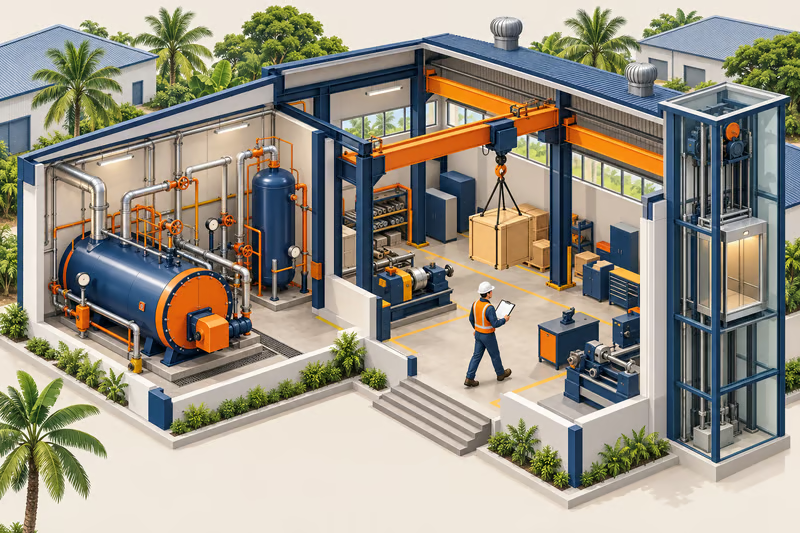
- Design verification by DOSH against a recognised standard. Lifting machinery applications go through MySKUD on MyKKP.
- Installation approval. Section 27C bans installing prescribed plant without the Director General's written approval. Plant moved to a new site needs fresh approval, although portable plant keeps its CF.
- Inspection and CF. A DOSH officer or licensed person inspects the plant, including a load test for lifting machinery and tests of safety devices. The CF lasts 15 months from the inspection date.
- Periodical inspection. It can be set from the first day of the 12th month after the last one. The inspector may give 14 days' notice, or the owner or occupier may propose a date. A visit is charged even if the plant is not ready.
- Early termination. Under section 27D(8), a CF ends when the plant is dismantled, repaired or damaged, unless the Director General exempts it. Alterations need prior approval and a fresh inspection.
Fees are set in the Sixth Schedule of P.U.(A) 99/2024. Typical periodical inspection fees:
| Plant | Periodical inspection fee |
|---|---|
| Pressure vessel | RM140 (under 0.1 m³) to RM700 (15 m³ and above) |
| Crane other than mobile, tower or quay crane | RM350 (under 3,000 kg) to RM1,200 (20,000 kg and above) |
| Lift | RM650 (travel under 12 m) to RM1,900 (300 m and above) |
| Material hoist | RM350 (under 500 kg) to RM1,000 (1,500 kg and above) |
| Steam boiler | RM300 to RM2,400, by heating surface |
Repairs found at inspection usually cost far more than the fee. Fees can be revised, so confirm with JKKP.
What happens to old FMA certificates and registrations?
Section 4(1) of Act 835 says any registration, certificate of fitness, approval or certificate of competency issued under the FMA shall "be dealt with under the Occupational Safety and Health Act 1994". The DOSH changeover FAQ of 18 May 2024 explains:
- Existing CFs issued on or before 31 May 2024 stayed valid until expiry (question C-4).
- Renewals after 31 May 2024 are handled under OSHA 1994 at the new fees (question E-1).
- Registration numbers carry over, and regulation 18 requires the owner to mark the number prominently on the plant.
- Factory permission and factory inspections ended: owners no longer apply for a first or periodic factory inspection (questions B-2 and E-7).
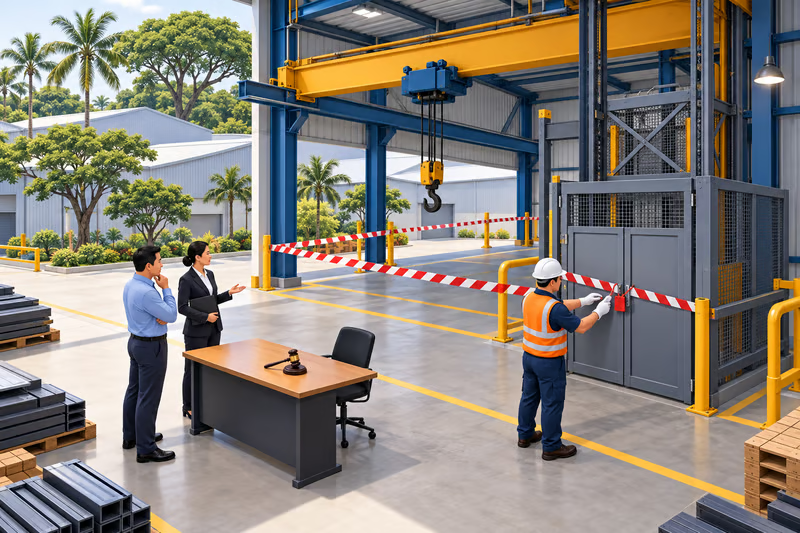
- Plant without a CF can be served a prohibition notice under section 27D(6) (question G-1).
- Operators' certificates stayed valid to expiry, with holders re-registering under Act 514 through MyKKP; steam boiler engineers and operators had to re-register by 31 December 2024.
A CF lasts at most 15 months, so every FMA-era certificate has now expired. If a seller or landlord shows you one, ask for the latest OSHA certificate.
Section 27A lets the Minister require notice of occupation, but only for prescribed workplaces; check with JKKP. The council licence, Bomba and DOE are separate: see our factory approvals guide and fire certificate guide.
Who is responsible: owner, occupier or tenant?
- Owner of the plant. P.U.(A) 99/2024 defines the owner as a person who receives rent or profit by leasing the plant, so a landlord renting out a factory with its crane or lift is the owner of that plant.
- Occupier. OSHA defines the occupier as the person with "management or control of the place of work", normally the tenant or the owner-operator.
- Operator. Section 27D(1) bans operating, or causing or permitting the operation of, plant without a CF, so both the tenant running a crane and the landlord allowing it are exposed.
| Duty | Who the law names |
|---|---|
| Keep plant maintained and safe (reg. 8) | Owner |
| One-year lift maintenance agreement (reg. 8(3)) | Owner |
| Notify DOSH within 30 days of selling, leasing or disposing of plant (reg. 5(5)(c)) | Owner |
| Notify DOSH within 30 days of disuse (reg. 5(5)(d)) | Owner |
| Prepare and pay for periodical inspection (regs. 6 and 7) | Owner or occupier |
| Written notice to DOSH before repairs (reg. 9) | Owner or occupier |
| 3-monthly examination of lifts and passenger hoists (reg. 14) | Owner or occupier |
| Alterations only with approval (reg. 11) | Owner |
| Plant records at the workplace (regs. 19 and 20) | Employer |
The lease can move responsibility. Under section 18(2) of OSHA 1994, a person with an obligation "by virtue of a contract or lease" for maintenance, repair or plant safety is treated as having control of those matters. Hiring a contractor does not move it: DOSH's director-general told The Star on 11 September 2026 that this "does not absolve the owner of the responsibility".
Due-diligence checklist for factory buyers and tenants
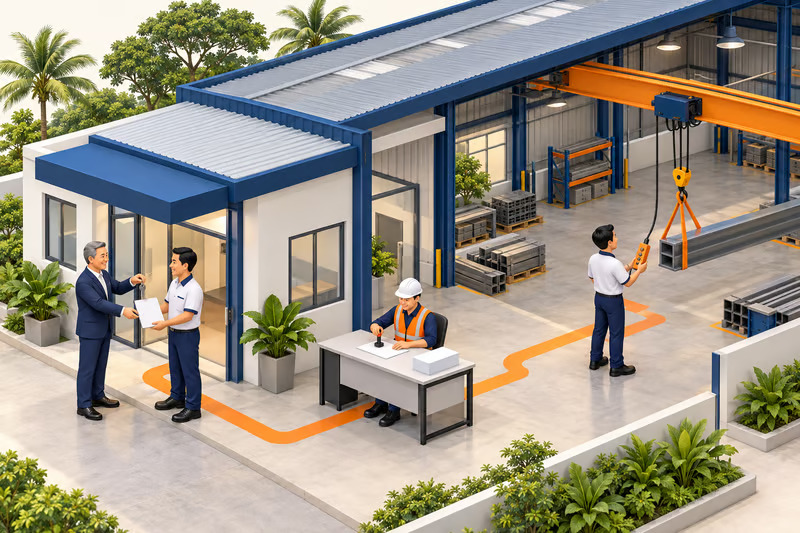
- A list of every boiler, pressure vessel, air receiver, crane, hoist and lift, with capacity and registration number.
- A current CF for each, dated within the last 15 months, with the number matching the plate.
- Design verification and installation approval for anything installed or moved since 1 June 2024.
- Inspection reports and any DOSH notices, including prohibition notices.
- Lift maintenance agreement and recent 3-monthly examination reports.
- The registered steam boiler engineer and operator, if there is a boiler.
- Crane runway beams shown in the approved plans; see our CCC guide.
- A site look at receiver corrosion, crane hooks, ropes and limit switches.
- Enough power for cranes and compressors; the factory power calculator gives a first estimate.
These fit into our how to buy a factory guide and the tenant checklist for renting a factory.
What to put in the SPA or tenancy agreement
Sale and purchase agreement:
- A warranty that every plant requiring a CF holds a valid certificate at completion, with a schedule of items, registration numbers and expiry dates.
- Handover of original CFs, design verification, installation approvals, inspection reports and maintenance records.
- If a CF expires before completion, the seller books and pays for the inspection, or the price is adjusted.
- The seller notifies DOSH of the transfer within 30 days, as regulation 5(5)(c) requires.
- A right to inspect plant before completion, with a remedy if a defect blocks renewal.
Tenancy agreement:
- Who is the "owner" of each crane or lift, and who books and pays for periodical inspections.
- Who pays for repairs found at inspection: wear and tear versus structural or replacement items.
- Who holds the lift maintenance agreement and examination reports.
- No altering, relocating or dismantling landlord plant without consent, since each step needs DOSH approval.
- For tenant-installed cranes or compressors: removal and making good at the end of the lease.
- Current CFs handed over at the start of the lease and checked at the end.
Our factory tenancy agreement guide covers stamping and other lease clauses. To start with lifting capacity in place, browse factories with cranes in Selangor or all factories for sale, and see sector needs on the factory requirements page.
Penalties for plant offences under OSHA 1994
| Offence | Maximum penalty |
|---|---|
| Installing prescribed plant without approval (s.27C(4)) | RM100,000, 1 year's jail, or both |
| Operating or permitting operation without a CF (s.27D(5)) | RM100,000, 1 year's jail, or both |
| Ignoring a prohibition notice (s.27D(7)) | RM500,000, 2 years' jail, or both |
| Altering plant without approval (reg. 11(5)) | RM50,000, 1 year's jail, or both |
| No 3-monthly lift examination (reg. 14(3)) | RM100,000, 1 year's jail, or both |
| Breach of general duties of employers and occupiers (ss.15 to 18B, s.19) | RM500,000, 2 years' jail, or both |
FAQ
Is the Factories and Machinery Act 1967 still in force?
No. The FMA 1967 (Act 139) was repealed by Act 835 with effect from 1 June 2024. Its machinery rules now sit in OSHA 1994 as amended by Act A1648 and in the Plant Requiring Certificate of Fitness Regulations 2024. Only matters pending on 31 May 2024 continued under the old Act.
Is my old FMA certificate of fitness still valid?
An FMA certificate issued on or before 31 May 2024 stayed valid until its expiry date, according to DOSH. Because a CF lasts at most 15 months, all of them have now expired. The plant should hold a newer CF issued under OSHA 1994, while its registration number carries over.
Does the landlord or the tenant renew the lift or crane CF?
Some duties fall on the owner (the party leasing out the plant) and others on the owner or occupier, so both are exposed. Under section 18(2) of OSHA 1994, whoever takes on maintenance by lease is treated as having control of it. State in the tenancy agreement who books and pays for each inspection and the repairs it finds.
Do I need a CF for an air compressor tank?
Usually yes, if it is a stand-alone air receiver with a design pressure above 15 psig, because it counts as a pressure vessel. The Second Schedule exempts some vessels, including those that are components of a rotating or reciprocating machine. Check with JKKP or the inspecting body if the tank is part of a compressor package.
Do forklifts need a certificate of fitness?
No. Forklifts are material handling equipment, listed in the Third Schedule, which takes them out of the CF regulations. Dock levellers and vehicle tail-lifts are excluded too. Employers still owe general OSHA duties such as training and maintenance.
How long is a certificate of fitness valid now?
Fifteen months from the inspection date, under regulations 5(6) and 6(2)(i) of P.U.(A) 99/2024. The next inspection can be scheduled from the first day of the 12th month. A CF ends early if the plant is dismantled, repaired or damaged.
Do I still need to register my factory with DOSH?
The FMA permission to use premises as a factory and the periodic factory inspection ended, and DOSH says owners no longer apply for them after 31 May 2024. Each boiler, pressure vessel and lifting machine still needs installation approval and a CF. Section 27A allows notice of occupation for prescribed workplaces, so check with JKKP.
Sources
- Factories and Machinery (Repeal) Act 2022 (Act 835), DOSH. Royal Assent 4 March 2022, gazetted 16 March 2022. Accessed 11 October 2026.
- P.U.(B) 128/2024: commencement of the Occupational Safety and Health (Amendment) Act 2022 (Act A1648), Federal Gazette, 2 April 2024.
- Occupational Safety and Health Act 1994 (Act 514), updated text as at 1 June 2024, Attorney General's Chambers via DOSH. Accessed 11 October 2026.
- Occupational Safety and Health (Plant Requiring Certificate of Fitness) Regulations 2024, P.U.(A) 99/2024, Federal Gazette, 2 April 2024, in force 1 June 2024.
- Occupational Safety and Health (Special Scheme of Inspection) Regulations 2025, P.U.(A) 25/2025, Federal Gazette, 20 January 2025.
- DOSH FAQ on the Factories and Machinery (Repeal) Act 2022 changeover, JKKP, updated 18 May 2024.
- Design of Lifting Machinery Other Than Lift, Escalator and Walkalator, DOSH, updated 16 March 2026. Accessed 11 October 2026.
- Regulations under the Occupational Safety and Health Act 1994, DOSH. Accessed 11 October 2026.
- Human Resources Ministry: Amended Occupational Safety and Health Act to come into force on June 1, Malay Mail, 4 April 2024.
- 'Keep lifts in working order', The Star, 11 September 2026.
Buying or renting, talk to us
Contact Adam or Yuki to discuss your requirements. Confirm the available service, scope and terms directly before proceeding.
| Agent | Mobile / WhatsApp | |
|---|---|---|
| Adam | 60176729873 | +60 17-672 9873 |
| Yuki | 60167724476 | +60 16-772 4476 |
Factories and Warehouses in Port Klang
Archived catalogue records with power, ceiling height and floor loading for every unit: